


The Value of Visualization
What are the benefits of ultrasound?
Quality of Care: Quality matters to the entire healthcare service. Discover how we can help you improve your leapfrog scores by leaps and bounds. Watch a video on how White Memorial did it.Efficiency: Save time, energy, and even personnel with bedside ultrasound. See the full article on how Greenville Health System created a cost saving care pathway for shoulder injury.Patient Safety: Learn how to avoid hospital acquired infections (HAI’s) through the use of point-of-care ultrasound. See how Memorial Hermann Health Systems achieved zero iatrogenic…

Steve Miller, Vice President of Product Realization at Sonosite
Steve Miller discusses his experiences as the Vice President of Product Realization at Sonosite
Meet Steve Miller, the Vice President of Product Realization at FUJIFILM Sonosite, Inc. Steve Miller joined Sonosite in July 2011. His career in ultrasound began in 1987 with Philips Ultrasound where he led advanced development projects in B-mode and Color Doppler. In 1992, he joined GE Healthcare to work on their first high-end digital ultrasound system as a senior systems engineer. As GE’s ultrasound business expanded, he was promoted into global principal engineering roles leading new global…
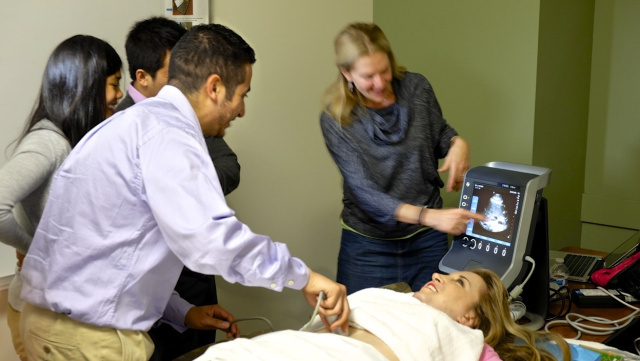
Participate in our Survey!
This is YOUR blog, too!
As the blog gets its feet under it, we want to know what YOU want to see on the blog! What are you excited to hear from Sonosite? Who do you want to hear from most? What other ideas can you give us? Fill out this form, and see what others are saying!Loading...
Morocco Trial Shows Remote Ultrasound Can Expand Access and Improve Maternal Care
Globally, approximately 800 women die from preventable causes related to pregnancy and childbirth every 24 hours. Of those deaths, 40 percent are due to injuries or conditions related to placenta complications. The only way to detect abnormal placenta challenges is through an ultrasound exam.
In the rural areas of Morocco, previously pregnant women had to wait up to two weeks to obtain the results of a critical obstetric ultrasound. Now, a new trial shows that local sonography with remote interpretation can reduce turnaround time to 24 hours,…

The Morocco Mobile Ultrasound Patrol
Morocco Trial Shows Remote Ultrasound Can Expand Access and Improve Maternal Care.
In the rural areas of Morocco, previously pregnant women had to wait up to two weeks to obtain the results of a critical obstetric ultrasound. Now a new trial shows that local sonography with remote interpretation can reduce turn around time down to 24 hours while decreasing cost from $80 to $2 per study.

Glimpse: A New Talk Show Series Focused on Trends and Thought Leadership in Visual Medicine
About Glimpse
Glimpse was introduced in May 2014 as a blog-based video channel focusing on the field of visual medicine and recent progress in the field. The show is produced by Sonosite FUJIFILM, Inc. and hosted by John Nosta, DIGITAL HEALTH philosopher, strategist & advocate. The project is headed by Luke Baldwin of Sonosite.
The goal of the project is to provide the public and especially medical providers with knowledge of recent insights into visual medicine, especially point-of-care ultrasound. In fact, rather than promote a particular brand or device, the show is dedicated to…

Sonosite Interviews Dr. Billy Mallon for the Code Black movie release
Meet Dr. Billy Mallon from Code Black MovieBilly Mallon has been a member of the Emergency Medicine faculty at LAC+USC Medical Center for over 2 decades, including 10 years as the Emergency Medicine Residency Director. As an educator he has won numerous teaching awards locally and nationally for his teaching style which is direct and unfiltered. He is a past president of the California Chapter of ACEP, a Fulbright Senior Scholar (to Iceland), an AOA Faculty Inductee, and has lectured in over 20 countries on a wide variety of EM topics.Dr. Mallon has been intimately…

Sonosite interviews Dr. Clare Roepke for the Code Black movie release
Dr. Clare Roepke is a third year emergency medicine resident at LA County USC Medical Center. She will take over as Education Chief and complete her final year of training in 2015. "...that raw emotion, that intensity, and that kind of care on a real firsthand, real basis with patients... It drew me in." Dr. Clare Roepke shares with Sonosite her experience with Ryan McGarry, producer of Code Black movie, who was also her mentor and a senior in her residency. He was to her "a teacher, and a role model". She thus has an intimate look into McGarry's process and feelings as he created…

Sonosite interviews Luis Enriquez, RN, for Code Black Movie
Luis Enriquez is a twenty-seven-year veteran Emergency Trauma Nurse at LA County USC Trauma Center. In addition to Clinical practice he serves as an Adjunct Clinical Instructor and lecturer. He is a graduate of LA County School of Nursing and California State Polytechnic University (BS Chemistry). Luis also is part of the Volunteer faculty with Good Samaritan Medical Ministry and has taught Emergency Nursing in Vietnam for the past three years. He has two grown children, Laura and Michael, with his wife Evelyn. Virtually the only nurse to be featured in the film, Luis Enriquez holds a unique…

Sonosite interviews Dr. Ed Newton from Code Black Movie
Edward Newton, MD grew up in Montreal, Canada. He has undergraduate degrees in History (Loyola College), Microbiology (UBC) and Medicine (McGill University). He trained in Emergency Medicine at the LAC + USC Medical Center and completed a Fellowship in Medical Toxicology from 1982-1985. He then practiced at the Royal Victoria Hospital in Montreal and returned as the Emergency Medicine Residency Training Director at LAC + USC Medical Center from 1988 to 1995. He became Vice Chair of the Department of Emergency Medicine in 1995 and Chair of the Department from 2002-2012. He currently is working…
Sonosite Interviews Dr. Todd Larsen from Code Black Movie
Dr. Todd Larsen is an assistant medical director at St. John's Regional Medical Center and St. John's Pleasant Valley Hospital in Ventura County. He has worked there since graduating from the Emergency Medicine residency at LAC-USC in 2009. His focus is on Pre-hospital Care, Education, and Quality Assurance. "In the midst of the chaos...I got my education that allowed me to practice medicine how I do." Sonosite interviews Dr. Todd Larsen from Code Black Movie, whose role in the film is portrayed as the calm, collected, senior resident. Dr. Larsen shares that in fact the…

Sonosite interviews Dr. David Pomeranz for the Code Black Movie release
Born and raised in Reno, NV, Dave Pomeranz is currently a third-year Emergency Medicine Resident Physician at LA County and USC. He attended Cornell University and studied Civil and Environmental Engineering and subsequently lived in New York City, Colorado, New Zealand, and back to Reno. He eventually attended the University of Southern California Keck School of Medicine in Los Angeles, where he still currently resides. "Emergency physicians play a huge role. And if the apocalypse hit, we'd have a decent skillset." Dr. Pomeranz explains that he had quite an important…

Sonosite Interviews Dr. Andrew Eads for Code Black Movie release
Andrew Eads is currently a third year Emergency Medicine Resident Physician at LA County and USC Hospital. He is a graduate of UC Berkeley (BS Chemistry) and received his Masters in Public Health from UCLA. He attended the University of California Irvine School of Medicine. He lives in Los Angeles with his wife Melissa, with whom he is expecting his first child later this year. "I was really proud of...the story that it tells about our hospital, about its mission, about the patients and what they go through, and the importance of county hospitals in general." He explains…
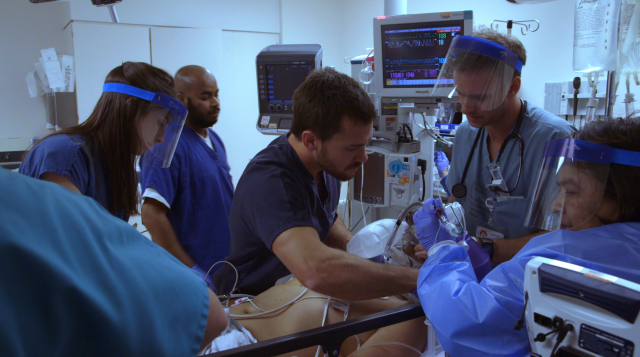
Code Black Movie - View Local Showings!
Welcome to the Code Black Movie Page!We are all so thrilled to announce that new dates for CODE BLACK have been added across the country! Check out the schedule below to see when CODE BLACK will reach your town. Keep an eye on our screenings page for new bookings - there will be more! Don’t see your city below? Interested in setting up your own screening? Visit the screenings page, and scroll down to GET INVOLVED. For group discount tickets in any of the above cities, please get in touch with Sara Kiener at Film…
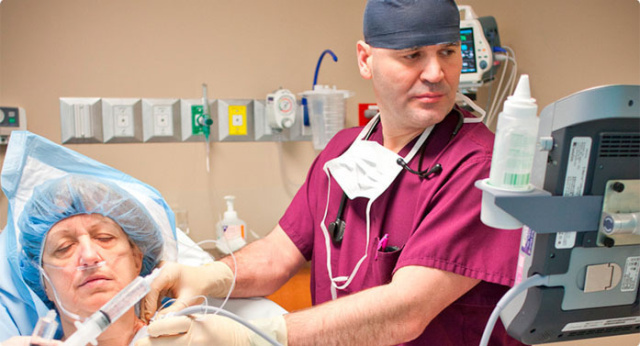
Dr. Bryan Matusic Study - Why be satisfied with any failed blocks when you can avoid them altogether?
Why be satisfied with any failed blocks when you can avoid them altogether?
Dr. Bryan Matusic, DO, Director of Anesthesiology for Advanced Surgical Hospital, Washington, PA
Growing Awareness
When Dr. Matusic first started practicing, the block and neurostimulator alone were considered best practice and block success rates of 85% were the accepted norm. "I was using just my own senses and the stimulator," he says. "Even if I had a 10%-15% failure rate, I was still doing better than most." However, when he became a regional anesthesiologist in 2010 and began performing orthopedic nerve blocks…
From Skeptic to Believer
Growing AwarenessWhen Dr. Bryan Matusic first started practicing, the block and neurostimulator alone were considered best practice and block success rates of 85% were the accepted norm. "I was using just my own senses and the stimulator," he says. "Even if I had a 10%-15% failure rate, I was still doing better than most."However, when he became a regional anesthesiologist in 2010 and began performing orthopedic nerve blocks exclusively at the Advanced Surgical Hospital, he recognized that even a 10% failure rate would be unacceptable. "We can't afford as many block failures here because we…
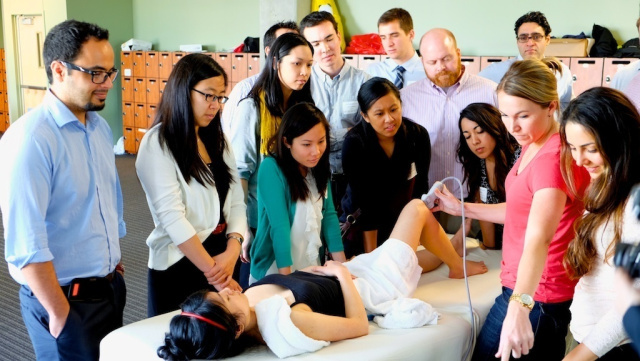
Ultrafest UCI 2014 Highlight Film
Ultrafest Ultrasound Festival hosted at UCI (University of California, Irvine) 2014Ultrafest is a free bedside ultrasound symposium hosted at UC Irvine Under the direction of AIUM member J. Christian Fox, MD, the University of California, Irvine (UCI), hosted Ultrafest, a free bedside ultrasound symposium for medical students throughout California, on Saturday, February 8th at the medical school campus. Ultrafest will provide hands-on workshops in emergency medicine, urology, obstetrics and gynecology, surgery, anesthesia, cardiology, sports medicine, and more. The symposium provides an…
Studies Indicate CT Scan Overuse, Radiation Overexposure
Recently the medical literature has documented the growing use of CT scans. It is certainly no secret that, when circumstances warrant, Sonosite advocates for the consideration of ultrasound first over other imaging modalities. A CT scan is a powerful and valuable test when used appropriately and—as with all medical procedures—when its therapeutic value is carefully weighed against its potential harm. Yet, while acknowledging CT’s value, I can’t ignore mounting evidence indicating CT scans are being ordered more often than are necessary or safe.
According to a June 13, 2012, JAMA report “Use…
Ultrasound Can Diagnose and Prevent Pneumothorax
by Dr. Diku Mandavia
It's ironic that one of the most efficient ways to detect pneumothorax in patients is also one of the most effective ways to prevent two of its more common clinical causes.
While scenarios that might trigger the suspicion of pneumothorax are too numerous to list, screening for it has included the standard trinity of chest-imaging procedures: x-rays, tomography, and ultrasound.
Ultrasound not only helps to diagnose pneumothorax, but it can play a significant role in helping to prevent it. A leading procedural cause for it in hospital settings is a failed central line…
ASA “Practice Guidelines for Central Venous Access” Published
It may be an exaggeration to suggest that every other month a new guideline or requirement is released by a professional medical body recommending or directing that ultrasound—especially bedside (a.k.a., point-of-care) ultrasound—be incorporated into clinical best practices, but often it feels like it.Case in point: In my last CMO Corner, I commented on the AIUM recognizing the American College of Emergency Physician’s Policy Statement “Emergency Ultrasound Guidelines,” which acknowledged point-of-care ultrasound as part of emergency care’s best practices.Not long ago, new ACGME Program…