


Transcript
- My name is Chris Pennell.
I'll be moderating today's webinar.
I'd like to welcome everybody to SonoSite
behind the scan webinar titled RAs
Utilizing Ultrasound Guided Tap and Rectus Sheath Blocks.
Before we begin, I have just a couple of things to cover.
For one, all attendees are muted and we'll be conducting a q
and a session at the end of the presentation.
And we are currently broadcasting this webinar on
multiple platforms.
And in order to ask questions,
you must be on the main Zoom webinar stream.
Now, if you're on the main zoom stream,
you can type your questions into the q
and a box in the toolbar located at the bottom
or the side of your screen, and you can feel free
to enter them throughout the presentation
and we'll get to them once the main presentation is over.
This webinar will be recorded
and archived for future reference on our webinars page.
And here with us today, we have Robert Fall.
Robert Fall is a certified anesthesiologist assistant.
Robert has been part of the Ohio Anesthesiology group,
Southwest Division at Southwest General Hospital
for the past 24 years, where he is the chief anesthetist.
He's also the clinical coordinator at Southwest
for the Cleveland case, Western Reserve University,
CAA program in 2016.
Robert created PNB school,
which focuses on expanding the use
of ultrasound guided regional anesthetic techniques.
He's taught at numerous anesthesia training programs
around the country and given talks to industry leaders
around the United States.
Robert, thanks so much for being here,
and I'll go ahead and turn it on over to you. Thanks,
- Chris.
Thanks for having me. Happy to be here.
My name's Robert Dahl, as you said, from PNB School.
I'm an anesthetist southwest of Cleveland,
Ohio at Southwest General, and I'm excited to be here
because I get to speak on some of the procedures
that we use on a,
on a sometimes daily basis, definitely weekly.
And I, I get to share what we do at Southwest
and how we've tweaked our procedures and, and blocks
and for, for abdominal surgery.
So today we're gonna speak on ERA a s utilizing ultrasound
guided tap and rectus sheath blocks.
And this should be a good one.
So some of the basic points here is some, are some
of the summary summary benefits from ERA a s
from abdominal surgery.
Some of the goals that we have,
it should all be goal oriented.
So I think many of us know these goals by now.
But definitely one of the biggest is shorted length
to stay in the hospital,
and that's a measurable outcome for sure.
Decreased overall complication rates, decreased infection,
DVT, et cetera, decreased 90 day readmittance rates,
which is important because of the global fees.
Now, decreased pain scores, which is important.
Again, most of what we do is driven by Press Ganey scores,
feedback from patients.
So if they don't have pain, those,
those scores usually go up.
And of course, decrease nausea
and vomiting overall is the,
the goal is increased patient satisfaction.
So if you summarize all of that, patients get home faster,
they have less complications, decreased pain
and nausea, vomiting, overall patient
satisfaction is gonna be increased.
So then it's the how, how do we,
how do we accomplish these goals?
And really the key is early ambulation, again, no secret,
it's been written about in numerous papers,
but you know, then it's how do we get,
how do we get these patients to ambulate a little bit
earlier, better pain control for sure.
That's, that's probably top two
with nausea and vomiting.
So decreased nausea and vomiting, increase your, your,
you know, better, your pain control one way or another.
And then return
of normal gut function is, is just as important.
It goes hand in hand for with nausea, vomiting as well.
And so how do we do that?
We, we usually think about limiting opiates in some way.
We found out that opiates are very useful.
We know that for a long time,
but how we use them has changed over the years.
And definitely in my practice, how I use them, I try
to limit it and, and give just what I need to give
to get patients through surgery comfortably into the
postoperative period.
And then of course, with regional anesthesia,
combine those two to decrease the opiates and your,
and your gut function gets back to normal
and you have a decreased rate of nausea, vomiting.
Other keys to early postoperative patient ambulation.
The biggest one that, that I think gets left out
and, and, and I tell everyone at our hospital
how important it is at least every other week, is you need
to establish patient expectations.
So you need to establish, you know, the, the ground rules
for what, what their part in all of this is going to be.
And, and there's a, a really good
summary here in this image of how to get that done.
So at every point of contact for the patient,
you wanna reinforce what the expectations are.
If they're having a, a, a bowery section, robotic,
laparoscopic, or open or
otherwise, you have to tell them what their,
what their expectations are.
So when they go to the surgeon's office, we wanna tell them,
Hey, you're gonna have surgery.
We're gonna tell 'em all about the surgery and
and postoperative care they're gonna get.
And once they hit that floor, we're gonna,
we're gonna tell them what their expectations are
and we, we can, we can define those any way we want.
So it could be sitting at bedside within a couple hours.
It could be walking within an hour,
taking 10 steps, 20 steps,
traveling 30 feet, whatever we decide.
Then in pre-admission testing,
they're gonna hear the same thing.
And pre-op
before the surgery, the nurses are
gonna tell 'em the same thing.
The surgical team, of course,
and anesthesia are gonna tell them the exact same
expectations and by the time they get this surgery done
and get to, to, to pack you
and then up to the floor, they've already
heard it seven times.
And you'd be amazed just by reinforcing that
what happens when they get to the floor is
they follow those rules and, and the expectations are met.
They're sitting at bedside, they're walking within hours
and everyone's on board.
So to summarize, avoid postoperative nausea and vomiting.
We include proper volume replacement.
I had to mention that because we don't wanna overload the
patient with fluids, but we don't wanna make them,
make them hypovolemic as well.
So euvolemic usually if it's a bowel
case, a little bit less.
So multiple anti-emetics, pre-op intraop
and postoperatively.
And then treat any, any other emesis postoperatively
with rescue antiemetics now that we have.
And, and again, decrease postoperative nausea and vomiting.
How maybe limit opiates we need.
We need to limit opiates in some way
and just use an appropriate amount if we're gonna use them
and get that gut function back as fast as we can.
So how do we do that?
Adequate postoperative analgesia is one of the ways.
And how do we do that? We, we use multimodal approach
for analgesia on these cases,
and we can define this however we want.
There's not one way to write an ERAS protocol,
and your surgeons are gonna have input,
your nursing staffs gonna have input.
Everyone in the anesthesia group's gonna
have input at some point.
So we use combinations of the drugs here, NSAIDs, ketamine,
ddo, magnesium, local by the surgeon on top of the blocks,
hemodynamic modulators.
You know, beta blockers have been shown
to affect substance p, gabapentin,
and propofol with an asterisk,
because I understand the slide says analgesia
and we've been taught propofol as an anesthetic,
but are there are ways to use propofol to,
to blunt responses to stimuli?
And we know it's very short acting.
And so if we can get patients through periods
that we know are gonna be stimulating with propofol,
it's a huge benefit because it goes away so quickly.
And so that's probably information
for a, a whole nother talk.
So we'll, we'll try to stay on task here.
And of course, how do we limit or avoid opiates?
One of the best ways we control analgesia that,
that we've seen over the last probably 20 years is
ultrasound guided regional anesthesia.
So that's when I got involved in this,
and that's been one of the best ways that we can,
we can control pain for abdominal surgeries.
So we wanna talk about tap and rectus blocks and,
and I'm just gonna speak on our approach,
the southwest general approach.
We almost always,
for abdominal surgery performed bilateral subcostal
ultrasound guided tap
and rectus sheath blocks that excludes open umbilical
and inguinal hernia repairs.
Because for those we would just do rectus sheath
or a one-sided tap block.
But whenever we're speaking on robotic or laparoscopic
or even large extended exploratory laparotomies,
usually we will use bilateral subcostal tap
and rectus sheath blocks to help
with perioperatively with pain.
So, and there is, I always get this question,
so why tap and rectus first ql?
'cause there are some, some big QL believers
and they use it every during these surgeries as well.
So why tap and rectus versus QS is a good question.
And for us, it came down to a few things.
And number one was consistency.
So tap and rectus blocks are very reliable.
We know they do not provide visceral pain relief,
but they provide very consistent
and reliable somatic relief QL ones.
Anecdotally for me, I did maybe 50 QL ones
before I decided that it wasn't the block for us
because two oh ones were hit
or miss, I could put the medicine in the,
the exact same spot every time,
and I just did not get the consistent results that I needed
to be able to tell patients
and surgeons that they were gonna have really good pain
relief postoperatively.
The other reason is that, that tap
and rectus blocks are technically easier, in my opinion.
QL ones are easy, but QL twos
and threes are technically difficult, meaning for all
of our anesthesia providers, they weren't going
to perform those at a higher rate of, of success.
So all of our anesthesia staff is comfortable performing tap
and rectus blocks, even even on, on morbidly obese patients.
They're just simpler.
So it's, it's all on for our, for our group,
it's all hands on deck,
all anesthesia providers perform blocks,
and so whoever's available, if you're available to come
and help be a third person even that's even better.
So it's all hands on deck.
We train everybody to perform the blocks
that we normally need to do on a daily basis.
So all hands on deck
and our protocol, I'm not going to get too specific,
but Multimodals begin preop, continue preoperatively.
You can decide what multimodals are best for you,
your patients, and,
and you know, you know, your surgeons the best tap
and rectus blocks performed before incision.
And that's important because you get ahead, you know,
you're gonna blunt that response to incision,
so you're gonna decrease the amount of opiate you need.
And these blocks aren't surgically analgesic. We know that.
We, we just feel it's important to,
to block these patients before incision.
And that's, that's an argument against surgeon performing.
And I put in quote, tap blocks,
I've seen them describe peritoneum injections with local,
like a, a, a block as a tap block,
which isn't truly a tap block,
but it works, it can work pretty well if they're good at it
and, and very specific with their injection.
But it's also after incision.
So we're al we're already gonna have to treat the pain
with opiates from incision,
and then the blocks will come later at a later time.
So we like to get out ahead of it, put the tap
and rectus blocks in before incision and,
and again, they're not, they're not surgically analgesic.
So a small amount of opiate given an
induction goes a long way.
And we try to time our opiate really well to minimize
how much we need to give timing's everything, especially
to our surgeons.
So the next slide will show, you know, the timing,
the workflow of the tap and rectus box.
When are you gonna perform these blocks?
Are you gonna perform 'em in pre-op?
Are we gonna perform them in the or?
You need to have an efficiency in mind
to get everything done
and not delay surgical cases,
especially at our hospital, that would never fly.
So you wanna have everything together,
get your supplies together, assign anesthesia role.
So if it's a, an anesthetist and a physician,
or if the physician needs to call someone in as well, extra
or two physicians just to sign who's doing what.
One does airway one does blocks
and the procedure begins, you know, just
after induction for us.
So what we'll do is we'll induce the patient
and then we'll utilize the OR team to prep
and drape for the block immediately
after the patient's asleep.
So I know in anesthesia we're taught, you know,
the airway first, but we can definitely work in parallel.
They don't have to disturb us, you know,
they're not moving the patient dramatically.
So we can, we can prep and drape for the block just
after we've gone to sleep.
And usually we utilize our OR team for that.
The PA or SA will do that, the resident, whoever,
whoever's in the room at that time.
And then we've already dedicated one person
to, to perform the block.
So they're pushing the, the ultrasound over while we're,
while we're intubating, getting everything ready.
And they'll do the block as we're taping the tube,
getting other things done,
getting the anesthetics set, the vent settings.
And really at this time, you have to think,
especially if you have somebody new at these,
you wanna limit the time you
allocate to complete the blocks.
It's not a race you don't wanna rush,
but it shouldn't take you 20 minutes to do these blocks.
These are pretty simple and straightforward.
So if it takes longer than you deem acceptable,
just aboard it or, or give it to somebody else and,
and see if they can't get it done faster.
But there should be a time limit to, to these blocks so
that you don't delay the surgeons.
If you do three of these cases in a day
and you add, you know, 10 minutes per case, that's probably,
probably a little bit too long.
Five minutes would be much better.
But again, it's all hands on deck.
Everybody's helping everybody's in on what we're doing
and they actually, what we've seen is our staff take
great pride in helping us.
I mean, they started gloving the anesthesia provider on the
way around the bed to do the blocks.
They're prepping, they're asking
to prep, they're all over it.
So it's been fun to watch.
The idea here is to work in parallel two groups working at
the same time, performing different tasks so
that we cut down on time.
It's just trying to be efficient and,
and just using common sense to,
to get the day done a little bit quicker.
So the tab block, just a quick review here.
I think this is a common block used.
The target is the lower six thoracic
and there's T seven to T 12 and L one.
We're gonna talk about that a little bit.
I, I think, I think the target there is a little more T
nine-ish for taps,
and that's maybe why we're gonna be talking about rectus
sheath blocks as well.
But we'll, we'll go over that. There's some,
some great images on that in a little bit.
The target for the local anesthetic, we want want
to inject the, the local superficial
to the transverse abdominus muscle
and deep to the fascia above the muscle.
That's important. You need to go deep to the fascist,
you need to enter the fascia, pop through it
and stop above the muscle.
Again, provides somatic analgesia to the abdominal.
No visceral pain really.
And we'll kind of try to break this down the best,
the best I could do here with this image.
So we have the external oblique
and as we peel layers away,
hopefully you kind of get an idea.
There's the internal oblique,
and then one more down will be the transverse,
the dominus muscle.
And you can see the little thoracic nerves run, run
through this plane that's highlighted here.
Deep to that is the peritoneum.
We obviously wanna avoid that
and we wanna just try to get the local,
where these little nerves are,
are innervating the abdominal wall.
This image shows exactly where we should inject.
If the needle is the yellow arrow, we're, we're gonna pop
through that fascia layer
above the transverse abdominus muscle
and inject just above the muscle.
And sometimes people are a little confused,
they think maybe we're within the fascia,
but if you pop through the fascia inject,
you actually compress the transverse dominance muscle
deep, okay?
It compresses against both layers of fascia above
and below and the local.
And so it kind of forms a line on top of it.
And then the line above the local,
and you'll see that in a video here, the line
above the local will be the fascia still.
So you'll see two lines,
but it's you, you inject deep to the fascia.
I wanna mention it's important
to consider pro placement while performing the block
because this is a volume block.
But if we're doing four blocks
and all the volume may not be as high
as you would really like, so depending on your pro placement
and where you perform this block,
it might dictate a little bit what kind of coverage you get.
So pro placement's very important
and I mean anterior posterior and cranial cosal.
So again, i I I said
before, we always perform these blocks just subcostal
and you'll see why in some images here.
But when we combine it with the rectus sheath,
we're gonna try to get as much purchase as we can
with all of these blocks.
So we perform a subcostal at the anterior aary line
for optimal coverage for us.
I never know where the surgeons are gonna put the ports.
Okay, I could, I could stare at them every single case I do,
and I can never figure out, there's always one that I,
I would've never guessed.
And so I want to get as much purchase on the abdominal wall
as possible so that if I have one robotic port
or a drain site that's not covered by my blocks,
I don't feel horrible afterwards
because really we haven't done any, any justice
for the patient at that point.
So just a reminder of some of the anatomical lines here,
mid axillary line, anterior axillary lines, costal margin,
T 10 level, I know pretty basic stuff,
but our goal
for the tap block is really this anterior axillary line for
how, how we we do these.
And you'll see an image of
how the local spreads at that level.
Most people think the T 10 level is where you put your pro
for all taps when they first start this.
Okay? I've always argued that just stay subcostal
and you'll get better coverage overall.
You can follow the costal margin with your probe.
You don't have to be transverse across the abdomen,
just just use that costal margin as
as one of your landmarks.
So here you can see where,
why probe placement is so important.
As we, as we move the probe anterior
and posterior kind
of shifts the coverage are of our abdominal block.
Now we're gonna have local spread in all planes,
but you can help yourself out by, by placing
that probe at the mid axillary,
anterior axillary line there.
The blue circle is, is where our target is.
Usually you can get a little bit more anterior coverage
by using the orange line a little bit more anteriorly there.
But remember we're also doing rec to sheath blocks, so
that's gonna cover more midline as well.
It's really comes down to the volume that you're using.
You need higher volume to get better coverage.
So this will show you kind of how, how,
we'll we'll just track that, that costal margin
with the probe and wind up at the anterior axillary line.
And then bring our, me our, our needle in medial
to lateral in plain.
Okay, these, these blocks were all done
with the in plain approach
and right at the anterior axillary line, just, just
that looks about right, right there.
And then our needle will come from the medial side
and we'll be in plain.
And you can see how our, our volume kind of spreads there.
We'll, we'll inject, and this isn't medical advice any
of this, but, but what we do is we inject about 20
mils there with our other block.
So 20 mils on each side for the tap block
and 10 mils each side for the the rectus sheet.
We get really good coverage.
We cover mostly abdominal wall with that.
So subcostal, anterior AOR lines, the volume block,
fascial plane block, this video show
proper local placement
after the initial improper local placement.
So you saw, you see the needle come in there from the medial
side and it's going to enter what I thought was the fascia
above the tap plane.
And it's not correct.
I could see the fascia in intact below
and now you could just see it pop through
that fascia plane and inject again.
And it pushes the muscle down a little bit.
I could feel the pop better.
And so we just readjusted a little bit.
I love this video for that fact
because it's, it, nothing's ever perfect.
You just have to keep adjusting until you get what you like.
And then once the local's injected, I always move into
that space and, and,
and then continue the injection, make sure I'm in that plane
and you'll see the local spread nicely kind
of people talk about the unzipping effect,
but definitely open up that space all along that plane.
So the tab block coverage, again, this shows where
that anterior
and axillary line, that injection at that at that level.
And you can see we get T 10,
we're not gonna get T seven with that tap block.
And so this is why we add the rec de sheath
block again, just subcostal.
And you can see the kind of coverage that we're
after with the rectus sheath block as well.
So with the tab block filling up where we inject it, getting
as much purchase as we can with that block.
And then adding the rectus sheath block adds a whole nother
level of coverage for the abdominal
wall rectus sheath block.
Re quick review here, again, very simple block targets.
The anterior cutaneous branches, the intercostal nerves
and literature says T seven to T 12, pretty accurate.
T seven with volume to T 12 for sure, with 10 mils
that we give, we, we get pretty good coverage.
So local anesthetic is deposited deep to the rectus muscle,
superficial, the posterior rectus sheath.
So just posterior to the, to the muscle, just deep
to the muscle, okay?
And, and just anterior to the, to the rectus sheath,
just superficial rectus sheath provides, again,
somatic analgesia.
So no visceral coverage. Again, a straightforward block.
And here it's a little bit hard to peel some of these layers
with the program I use here, but you'll get an idea.
There's the anterior rectus sheath fascia there,
and then of course the rectus muscle.
Yeah, it's okay. And then, and then the posterior rectus
sheath, there'll be other images to show that as well.
So in fact there's a, there's a labeled image of that.
So here, here's the image right here.
So the, the needle's coming from the medial side,
we can see there's the, the rectus muscle, the belly,
so medially, the linear elbow would be medial off this
screen between the rec eye.
And you can always start your, your exam there
and then just move lateral to either side.
That's a good way of finding the rectus muscle,
especially on a, on obese patients.
Important here is the transverse salus fascia, which is
that orange is yellow line.
And then the peritoneum, which is the green line,
forms two lines beneath deep to the rectus muscle.
Many people often think when they're alerting this,
that you inject between the two lines.
And that's, that's not the case.
You want to, you're gonna feel the,
the transverses fascia with your needle.
It's gonna be a blunt tip needle, hopefully.
And you're gonna inject at that point,
and it's going to, you're gonna see another, you know,
an un zippering effect there.
It's gonna push the muscle anteriorly
and then the local will spread along
that transverses fascia.
And you'll get really good coverage with,
with a small volume here.
So again, subcostal block, it's also a volume block.
Anytime we talk about fascial planes,
usually it's a volume type block,
better coverage with higher volume.
And you can start your,
your exam midline and then move lateral.
So you'll see linear elbow, you'll see both rec eye
and just move, move lateral so that you center one of the,
the rectus muscles in, in your ultrasound image.
And then for us,
I always teach medial collateral in plain approach.
I think that's,
there's some blood vessels you can get into there laterally.
So to avoid that, a medial
to lateral approaches a little bit better, notice
how the probe is angled to mirror the, the costal margin.
It's not transverse across the belly.
And, and that's done on purpose here.
So you can just mirror the costal margin and,
and use that as one of your landmarks.
Video here again, rectus sheath.
A block is pretty straightforward. Rectus muscle.
The posterior rectus sheath, same image that was labeled
that you'll see the needle approach medial to lateral.
And there's that unzipping really straightforward.
You're gonna feel that transverse
satisfaction with the needle.
You can stop, you can inject the mill, open up the space
and then continue injection once you,
once you're sure where you are.
So the rectus sheath block, again,
immediate immediately subcostal, the goal is
to get a little more cephalic coverage than the tap
lock I believe provides.
So T seven is pretty consistent
and it's gonna be more anterior medial wall coverage.
Again, combined with the tap lock,
you're gonna get great coverage of the abdominal wall.
Interestingly enough, cadaver die studies,
there's one just kind of done,
when you inject the rock die at that level, it will,
the local anesthetic will spread along that sheath
will spread coddly.
So you'll get great coverage depending on the amount
of volume that you inject.
And they've done dye studies to prove that.
And we see it in our incisional coverage every
time we do these blocks.
So even if a laparoscopic procedure is converted to open,
we'll get really good coverage of that midline incision.
So I'm very confident, you know, an anecdotally that,
that these blocks work really well
for perioperative pain relief.
So again, and this,
this needle comes in from the lateral side only
'cause I thought I would run outta room on the, on the,
if it came from the medial side,
but you can see a single injection bilaterally,
this will spread along the sheath
and this is where we get great coverage from the rectus
block, even even for midline incisions.
So to summarize this, again,
this is our tap block in incision.
We combine it with our rectus block
because we don't feel it gets cephalic coverage enough.
It doesn't get to the TC you know, it's T seven level
as consistently as we would like.
Even an anterior injection wouldn't, wouldn't get there.
So we add the rectus block bilaterally
and we get great coverage of the,
of the abdominal wall from both of these blocks.
So we'll do tap and rectus blocks bilaterally.
And you know, it usually takes us about,
people laugh at this, but maybe three
or four minutes on, on average to get these blocks in.
So it's not a race, but it's challenge.
We like a challenge for sure,
add your multimodal analgesics.
We know the tap and rectus blocks aren't surgically
analgesic, but we know what to expect with them.
We know they're consistent
and we can really apply our multimodal analgesics in a
timely manner to to, to help the patients be pain-free,
perioperatively antiemetics as appropriate, pre-op,
intraop post-op, and then rescue.
So have 'em all lined up, have some sort of protocol so
that you can track it, you know, your, your outcomes,
and then you can tweak it as, as needed.
Minimize overall opiate and,
and maximize a small amount of opiate
with optimally timed dose.
So timing of opiates is really important.
It can really decrease the amount
of opiate you use if you time it well.
So you can blunt the response
to intubation with a little opiate.
You can blunt the response to incision with a little opiate
and then everything else, the, the multimodals and,
and the blocks should carry you
through the rest of the procedure.
And if it doesn't, you have the right to give more.
But less is more about the timing
of the opiates are really important to us.
I teach that to, to everyone I work with as much as I can
be efficient with the blocks to gain surgeon, buy-in,
be ready, have everybody on board, utilize the team.
Usually the assistants are kind of standing
by while someone's helping with anesthesia.
So you can put them to work or ask them to work or,
or talk to administration
and see if you can't get something together.
But we, we definitely, I love seeing it.
They take part in it as a team.
It's great for everyone in the program.
They take pride in what we do.
So it's, again, it's not a race,
but when we, when we perform these blocks in about three
or four minutes and, and everything goes as is planned,
everyone takes pride in that.
And so it's good for the team as well as the patient,
the number one contributor to great success
with these blocks or even our, our total joints.
And those blocks set patient expectations early,
get 'em ambulating and that takes the, the whole,
the whole perioperative team all the
way up to the floor nurses.
They need to be on board about what we're trying to do.
And, and, and you have to educate, you have
to educate everyone, tell 'em what the goals are,
define everyone's role, and work together
and then, you know, get their feedback, you know, make sure
that they're involved in the system.
So setting patient expectations early, very, very important.
That's it. Thanks for having me Jody Sauna site, love
speaking on some of these procedures and,
and era A protocols and the things we do at Southwest
and sharing 'em with everyone.
I know everyone does things a little bit different.
I love to learn from everyone.
So to be able to speak on something like this that we get
to use daily or weekly is a lot of fun for me.
So thank you again and hopefully
- Everyone gets to use out of this.
Thank you so much Robert for, for
that excellent presentation.
We got quite a few questions that came in.
So let's see, the first one is, any use
of goal directed volume replacement with flow track
- Monitors?
Boy, that's a great question and the quick
and simple answer is no, and we don't have the equipment
and I don't, it's not anything that anyone's pushed for
or asked for to my knowledge either.
It's, it's been, it's, it takes a, as you all know,
probably it takes a lot of work to get a protocol
and a system in place.
And so for us it's been baby steps and,
and we've gone two steps forward, one step back,
but we keep going forward.
So sur I mentioned surgeon buy-in there at the, at the end
and it's important
and especially at our hospital being a
private practice hospital.
So these private practice general surgeons especially can
really move and we're giving 'em two,
if not sometimes three rooms
and three teams believe it or not.
And so just to not slow him down sometimes is a lot of work.
So no, unfortunately I don't have much
experience with that at all.
His surgeries are pretty quick
and our other general surgeons are pretty quick.
So as far as volume replacement, we're we,
we keep it pretty simple.
- All right, and the next question is,
what about low thoracic epidurals for laparotomies?
Are those used at all?
- Yeah, not at our hospital. Not for years.
We used to use thoracic epidurals
for all kinds of surgeries.
Nephrectomies other open large laparotomies,
and they're really the gold standard as far
as I'm concerned, as far as analgesia goes,
you know, there's a whole nother risk profile.
And also most of the time our goal is
to get our patients walking really fast postoperatively.
So we've kind of gone to this ultrasound guided, you know,
peripheral nerve block technique and this era eras protocol
and, and, and managed patients that way.
So over the years, that's kind of fallen by the wayside.
But definitely within my career we were, we were,
we were utilizing thoracic epidurals and e
and even low thoracic epidurals for,
for laparotomies as well.
And, and like I say, they, they worked great.
I mean, if you want someone
to have less pain, that's the way to go.
They're, they're excellent. So good question.
- Nice. And a follow up to that,
are these all day surgeries that you're working on?
- Our, our hospital,
I would say the longest surgery would be six
to seven hours would be like a,
a very complicated colon resection
with maybe some adhesions.
So that's probably the longest surgeries we're performing.
And we get, you know, we get probably 20, 20 hours out
of our tap and rectus blocks, I would say.
So, yeah, pretty long, but not all.
I wouldn't call 'em all day surgeries.
- Gotcha. All right, next up we have in laparotomies
and abdominal surgery, what data compares UGRA tap
and rectus block EFF efficiency or efficacy versus x parel
or other catheters directly by surgeons
to directly visible tissue planes?
- I, I don't have the study right off the top of my head,
but that's a very direct question
and there's, I'm trying to think.
There's probably data there,
but I, I just can't quote it at this time.
- Gotcha. And then
after volume blocks, what volume
of local do you advise surgeons who want to add at the end?
- So after, so it depends on the length
of the surgery, obviously.
And like I said, in in the presentation we're doing 20,
I'll dilute the local just for this reason.
So I will use 0.375% ropivacaine
and so I will dilute the half percent a little bit
and I will use 20 for each tap, 20 mil mills
and I'll use 10 for each rectus block.
And if as long as the surgery in most
of these abdominal surgeries are longer, I'm comfortable
with them using, you know, 20 mils a quarter percent.
We usually don't get that question even asked.
It's been so long to inject and the patients do fine.
- Excellent. Good question.
Next question is, what are you using for your la
- Yeah, so I just kind of answered that,
but row pivoting 0.375% will,
will dilute it a little bit just
to give us a little more wiggle room at the end when the
surgeons wanna inject the ports
or even in the beginning if they have a little epinephrine
in their local and they want to utilize that to stop some,
some of the ports from bleeding.
So we'll, we'll just dute it a little bit and,
and I've had luck
and I think for other reasons I've diluted sometimes
to quarter percent and,
and it seems to work close if not as well
as the 0.375.
So it's semantics there.
I think as far as the, you know, how much,
how much energy you actually give, it's,
it's tough to tell sometimes.
- Gotcha. This is a follow up to the previous question
about the all day surgeries.
You said what, what I mean is do the patients go
home that same day?
- So both. So some patients go home same day and,
and one of the interesting things we found,
and probably one of the reasons why this presentation came
up with CYTE is through COVI, we were,
they were, the hospital administration were advising us
to cancel any admissions, any surgeries
that needed admissions that weren't emergent.
This was just at our hospital.
I'm sure some of you experienced that
and you know, all of this worried us, the volume decreasing
and what we were gonna do with staffing.
And one of the things we offered
that I offered immediately was
because I didn't un, I didn't know if all the surgeons
understood that, you know, they weren't sending all
of their hysterectomies home in the same day.
And I think with what we had done with our blocks
and our ERAS protocols, I think it was time to, to kind
of have that conversation with some of these physicians
who just weren't comfortable for one reason
or another, sending their hysterectomies home the same day.
And, and that was a real positive that came out of this, is
that they understood that they could do that.
Excuse me. So yeah, so a certain percentage, you know,
their hysterectomies go home the same day.
Now even our o our GYN surgeons have requested,
we do these blocks for everybody, for everything,
even if it's a tubal ligation depending
on where they're putting their ports.
So some, you know, some of the patients stay,
some of the patients go home.
- Excellent. Next question is, what percentage
of peritoneal puncture do we advise patients
for rectus sheath blocks?
- I don't, I don't quote a number.
I I say very low risk to, to insert the needle in,
into your abdomen and, and cause trauma.
And to the, to my knowledge, I still haven't heard of, of a,
a poor outcome from the happening.
And, and some of the other experts that I speak with
around the country really haven't had any
issues with it as well.
So I'm not quoting a number there,
I'm just going over generalized risk
and that explaining that that is a risk
and it's always a risk.
So no numbers on that one.
- Okay, next one is,
our surgeons can be in the abdomen within five
to 15 minutes of induction.
Since large volume locals are likely lower
concentration, slower onset.
How long do we need to ask surgeons to wait
before incision for preemptive analgesic benefit
- Can only speak from my experience, and I've never waited
and never had a problem.
And these blocks work very, very consistently.
So I don't know that there's,
that there's been a study on this either.
So just from my knowledge
and from what you know, I've done
at least over a thousand of these, if not more.
I, I don't keep track,
but there's never been a problem with,
with the surgeons being too fast and entering the abdomen
and the local just kind of leaking out and having no effect.
Yeah.
- All right. What's your routine antiemetic therapy?
- So as far as this protocol for me it's,
it's two types of surgeries.
One is a bowel resection, one is one is anything abdominal
that's not a bowel resection.
So for our bowel resections, we're,
we're withholding Decadron
for everything else I'm giving,
I'm giving four milligrams a Decadron, I'm giving Zofran
and, and now we're using Erol again.
And then I'll also a rescue Antiemetic.
Bohemus, we use that as well,
but there's others for
sure. That's pretty much it. Okay.
- Okay. Next question.
Is X perel or adding adjuncts to local?
- Yeah, so I am off the adjuncts to local train.
I, I don't add anything.
I would use X perel if I had it
and they, I don't have access to it.
I, I, I haven't used it.
I have limited, limited experience with expel
because we, we are unable to get it at our facility and,
and our pharmacy is, has been very clear about that.
So we've tried multiple times
and we've tried for multiple reasons and,
and I know a lot of people are using it
and I would, I would love to use it and try it and,
and have my own opinions on it.
I see the studies, but,
but again, I, I would love to to use it myself and,
and see I wish I could tell you more.
Yeah. But I know a lot of people are using it for sure.
- Alright, I'm not sure if you answered this already.
What is your local anesthetic cocktail preference?
- Yeah, so for these tap
and rectus blocks, it's just, it's still 0.375% ropivacaine
and, and then, you know, doublechecking in the volume,
if you have a tiny patient you definitely have to have
to watch but usually fall well within the,
the max dose of, of ropivacaine.
- Gotcha. Any use of liposomal bupivacaine for these blocks
for longer duration of action?
- Yeah, so I kind of answered that.
It's just naming it a little bit different,
but I wish, I wish and I wish I had that experience
and I, I wish I could talk about it more
because I had the experience
and I know some out there are using it
and I maybe in the future we'll come back and
and update this a little bit.
- Gotcha. And for multimodal analgesia,
do most people get magnesium and DMin
and ketamine routinely?
If yes, what doses?
- They're pretty good there Chris. Thanks Dex Meine.
Yeah, so I will use DM meine
for our surgeons are pretty quick even in the longer cases
and our, a lot of our patients are no opiate naive.
They're, they're just, they don't take a lot of opiates.
So I will bolus my dexa medo up up
to about 25 mics for the case.
Non bowel resections I'll definitely use,
I can use a pain dose of Decadron sometimes as well.
Ketamine, I'll definitely use magnesium.
I stay away from only
because of our relationship with our surgeons.
I think they have asked us to stay away from it.
I've offered it and, and no one's really taken me up on that
and that, and that's okay.
So ke definitely ketamine, DMed
and then if, if the patients are hyperdynamic still
after insufflation, then I'll look to use some beta blocker,
you know, to kind of, to kind of top things off.
And then some well-placed opiate for sure.
I'm, I'm not opposed to that.
I can do many of these cases without opiate,
but excuse me, definitely 50 mics
of fentanyl upfront goes a long way
and that's kind of the message I was trying to get that
that I'm not a big huge opiate free guy.
I think a little bit of opiate goes a long way.
So as long as we're using that upfront and,
and judicially, I think, I think that makes sense.
- Alright, next question is
how do we cover the higher T six dermatomes of
subcostal incisions?
Yeah,
- It's tough.
You can add some local up towards the top of the incision
and, and I think that's probably the best way to do it with
what we're trying to accomplish.
So if they're really pushing the superior portion of that,
that incision, I just think injecting local anesthetic right
at the top might, might just cover that it won't last
as long, but it might get 'em walking a little bit quicker.
And that's all we've really tried.
So if that, if they're really pushing that incision
superior, then, then it's, it's,
they're probably just gonna have a little pain.
You may just deal with that little, with a little opiate
as well, to be honest.
- Okay. How did these blocks compare with ESB?
- So I have used ESB for thoracic.
I, I haven't really used ESB for abdominal
because we wrote this tap
and rectus protocol to compare the two.
You would've to, you know, this would,
this is a study worthy subject, right?
So the bottom line is
for me is perform the blocks that
it's twofold are most consistent for the patient so
that you can, you can tell these patients exactly what
to expect when they wake up and that.
And then number two,
can you perform these routinely and quickly?
So abdominal, you know, ESPs, when are you gonna perform?
Those are, they're, they're gonna be performed in pre-op,
which might even be better if you have to perform 'em in,
in, in the or, it's probably gonna be a little cumbersome.
And then can everybody perform ESPs?
Because at our, at our place, it really didn't take off
so far, so I never want to jump down that rabbit hole
where only one or two people are doing ESPs
and maybe a surgeon views those as being better and,
and so it gets a little murky there.
So yeah, no, I would love to, I would love to read that data
and, but we do extremely well
with our tap and rectus blocks.
They're, they're pretty straightforward
and everyone's in on it.
So that's where we are now.
- All right, fantastic. Great questions.
Yeah, doesn't look like we have any more questions left.
So Robert, thank you so much for being here
and delivering just an amazing presentation
and sticking around for the q and a.
Super helpful for everybody.
Next time, you know, check out our
behind the scan webinars page on sonosite.com
to see what's coming up next.
And for everybody else,
this recording will also be available there as well.
So thank you again, Robert, for coming by
and thank you everybody else for coming.
- Thanks for having me. Thank you.
For more than 20 years, Robert Thall has been utilizing Sonosite systems for regional nerve blocks as part of abdominal surgery ERAS protocols. Within the webinar we will discuss the goals of ERAS protocols, opioid reduction using a multimodal approach and lastly the keys to performing successful abdominal blocks. This includes setting patient expectations and keys to early ambulation.
Watch to learn more about
The benefits of ERAS Protocols for Abdominal Surgery along with scanning techniques for TAP and Rectus Sheath blocks:
- ERAS Overview and Goals
- Opioid reduction and a multimodal approach
- TAP block technique
- Rectus Shealth block technique
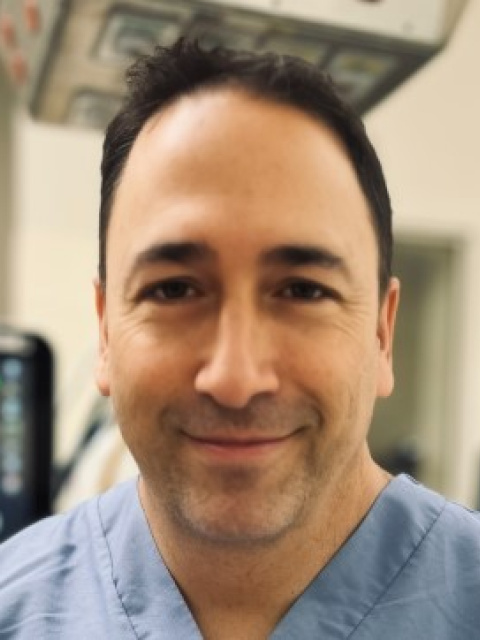
Robert Thall graduated with a Masters in Anesthesia from Case Western Reserve University in 1998. He has worked as part of the Ohio Anesthesia Group Southwest Division in Middleburg Heights Ohio at Southwest General Hospital for the past 22 years where he is the Chief Anesthetist. He has written and implemented multiple ERAS protocols at Southwest General including Total Joint and Abdominal Surgery Eras Protocols.
Robert Thall is also the Clinical Coordinator at Southwest for the CWRU CAA program.


This educational webinar is intended for healthcare professionals and not for patients or consumers. The material is provided for general educational purposes, as a reference and a supplement to professional experience, education and training, and should not be considered the exclusive source for this type of information. The presenter in this webinar is a paid consultant of FUJIFILM SonoSite, Inc., and is sharing the presenter's own views and opinions that do not necessarily represent the views and opinions of FUJIFILM SonoSite, Inc. This educational webinar is not intended to recommend any device for a particular indication or to provide indications for use for any device. At all times, it is the professional responsibility of the practitioner to exercise independent clinical judgment in each particular situation. Fujifilm assumes no responsibility or liability for any misuse of the information imparted in this webinar. This educational webinar does not supplement, replace, or supersede device labeling, including instructions for use, which accompanies any FUJIFILM Sonosite product.