


Transcript
- Welcome to the Sonos site
behind the scan webinar titled Beyond POCUS Archiving.
Why is it so important?
My name is Chris Pennell
and I'll be hosting today's webinar.
Before we begin, please be advised all attendees are muted,
and as the discussion is going,
you can type your questions into the q
and a box at any time in the toolbar located at the bottom
or the side of your screen,
and we'll get to those questions at the q
and a session at the end of the discussion.
This webinar will be recorded
and archived for future reference on our webinars page on
sonosite.com.
So here with us today leading
and moderating the discussion, we have Dr.
Colin Bell. Colin is an emergency physician in
Calgary, Alberta, Canada.
He's active nationally within the CA Canadian POCUS
community and is currently the clinical practice lead
for the CAEP emergency ultrasound committee.
Colin was previously the POCUS director
for the emergency department at the Kingston
Health Sciences Center.
He completed his POCUS fellowship at the Denver Health
Medical Center in 2016.
Colin is active as a POCUS researcher
and his focus is POCUS education
and automated technical skill assessment.
He's a passionate advocate for image archiving.
With that, I'll turn it over to Colin to get started
and introduce our other panelists.
- So POCUS is a disruptive force within medicine
and until recently there was a traditional workup
and diagnostic pathway for most patient presentations
and subsequent diagnoses.
POCUS disrupts this often front securing a diagnosis far
more quickly than traditional processes,
and this causes tension as the patient
and provider wait for the rest of the system to catch up,
often needlessly tying up additional resources.
On the contrary, there may be a lack
of consultant confidence in the security of such diagnoses
as this often hinges on laboratory medicine,
consultative imaging, and clinical reassessment.
And some non-ED consultants do not accept
or have not accepted the validity of POCUS are kept up
with its considerable progress.
Over the recent past noncritical,
patient interactions are often initiated
by the computer rather than the bedside and history
and physical exam and isolation rarely meet the bar
for exposing patients to possible harm.
One needs more than a story to engage consulting services,
a robust picture archiving
and communication system where PACS serves
as an effective communication tool
to engage Consultants provide an avenue
for quality assurance and generate additional income
for emergency departments.
But traditional PAC software is in flexible.
Think of the last time you ordered a portable chest x-ray
without submitting a requisition.
PO is a diagnostic
and interventional tool occurring at the bedside in real
time and over time it becomes more
ingrained across medicine.
Middleware is a software solution that simultaneously acts
as a bridge between other software databases
and hardware contemporaneously functioning
as a holding container for POCUS studies,
it's a communication tool in the clinical realm
and facilitates education research.
An advantageous characteristic for middleware is
to have the adaptability to compile examinations occurring
under various POCUS workflows.
So thinking about diagnostic
and interventional studies, think of the breadth
of different studies you do in your department
and in other areas of the hospital.
Think of critical resuscitation scenarios as well
as typical diagnostic workflows.
How from middleware has significant functionality in
rectifying and complete data linking studies
to patients facilitating image stores, communication,
reporting, and assisting and billing.
So today's objectives are to identify the difference
between storing images and pacs
and utilizing POCUS specific middleware to understand
how a POCUS archiving
and connectivity program can support quality improvement and
or credentialing programs leading
to enhanced clinician proficiency to gain insights on how
to communicate using the connectivity of POCUS archiving
and how to understand
how specific POCUS archiving software can facilitate billing
and appropriate POCUS scans can
increase return on investment.
So throughout our discussion today,
we're gonna focus on a few themes, the characteristics
of a POCA specific middleware for clinicians
and consultants, their interaction with the middleware,
the interface for quality assurance,
and the interaction with electronic medical records.
Our panelists today are Dr. Rob Ferry. Dr.
Ferry is a Utah native.
He graduated from the medical school at the Medical College
of Wisconsin and completed his residency at the main Marine
Medical Center, sorry, the main medical center.
He did three years of active duty
for the United States Air Force, completing two tours
of duty in Iraq, after which he completed an emergency
ultrasound fellowship at Palmetto Health in
Richland, South Carolina.
Dr. Ferry spent nine years at Vanderbilt Medical Center,
subsequently where he founded the emergency department
ultrasound fellowship and the emergency ultrasound division.
He moved to Indiana in 2019 where he currently serves
as the POCUS Division chief in the
Department of Emergency Medicine.
Our other panelist is Dr. Hippskin. Dr.
Hippskin iss, a board certified emergency physician in
Visalia, California.
He's an assistant medical director
for the emergency ultrasound fellowship at Health.
John did his residency at Cook County in Chicago in 1995.
Prior to the widespread use of pocus.
He was an early adapter using the radiology leftovers.
Listened to ultrasound based podcasts
as they became available,
and then subsequently completed his POCUS fellowship
through the Ultrasound Leadership academy.
He's now an advanced emergency medicine focused practice
designated ultrasound through Abe M.
He's a POCUS educator
and he focuses on optimizing end user workflow
and improving coding for billers
and reimbursement for others.
So with that, we'll start our first section,
which will last about 20 minutes on the
fundamentals of pocus.
So for our panelists, why do you believe it is important
to document POCUS exams in the emergency department?
- So Colin, thanks, glad to be here.
Excellent question. So, you know, I, I think, you know,
as I'm getting old and I've been around
and seen sort of the evolution of how we've used point
of care ultrasound, I would say that
the reason why documentation's important is
because, as you sort of mentioned in your introduction,
that's how we legitimize what we're doing.
So in other areas of medical imaging, we need to document
and show that we're documenting what we're doing.
And so because point CARLSTONE is an imaging tool, we want
to demonstrate for downstream providers
that we've done an exam, these are the findings of the exam.
And as point of sound grows, the good news is, is
that these downstream physicians,
clinicians actually also know how to look at these images,
know what they mean, and also can understand the
clinical significance.
So that, so to me that, you know, not only is it important
for medical-legal reasons,
but as we grow point of care ultrasound, it's important
because it provides very useful clinical information
for those physicians, especially
as point of care ultrasound grows.
- Yeah, I think those are all good points
and also glad to be here today.
We can also more effectively
communicate within the department.
So you, when starting a patient's workup
and identify a problem right up front,
that documentation helps some
of your ED colleagues in addition to which are some
of the downstream providers as well too, in addition to some
of your inpatient consultants.
So getting it all down in a, in a format
that they're becoming more increasingly comfortable
with is, is very important.
And again, it allows to, allows one to optimize
patient care and to, to put that down there so
that others can follow up on
what you've started for the patient.
- Perfect. So in that vein, tell me
what you think the optimal process is versus kind of
what this baseline standard should be.
- So the optimal process is
that there's a computer chip in my brain, it can see
what I do and it can document it for me, right?
That would be the optimal process, but it doesn't exist.
But I, I think that, you know,
unfortunately there's,
there's going to require, there's gonna be some need
to do something extra, right?
I mean, I think for a long time using point
of care ultrasound, we did what I, what I usually
use the term we had bad sonographic hygiene in,
in other words, we picked the machine,
we went in this patient's room, we did the study,
and then we like cleaned it off
or maybe cleaned it off right,
and then rolled it back to where it needed to go.
As we use this more and more
and we understand the importance of documentation, we need,
we recognize that there's a need
for good sonographic hygiene, meaning that I need to go in,
I need to put the patient's information in, I need
to identify myself,
and then I have to go into another program, which, you know,
you've talked a little bit about why we need that to be able
to document those exams and then get them into the EMR.
And so I, I think, you know,
before we had the capacity to marry images from the study
with some type of documentation,
we may just have written in our note, you know,
fast exam negative
or you know,
lung ultrasound demonstrates pleural effusion, something like that.
But ideally we wanna marry those two things together.
And so fortunately we have programs, workflow solutions
that allow us to do that,
but it does require a little bit of extra work
and it requires a little bit of upfront training, you know,
training how to have good hygiene, sonographic hygiene so
that we can begin
to develop habits that allow us to do that.
- Yeah, optimizing the workflow really is
what is the minimal amount of learning
and upfront work for each patient required so
that the end user can basically focus on the patient.
So how, what's the least amount of work that that's seen
as superfluous
but necessary so that you can spend more
of your time on the exam, making those clinical decisions
and then yet somehow, and then getting 'em into the chart.
So yeah, optimal is focused on the patient least amount
of work and hopefully having a good software solution to
to, to make those make that happen.
- So John, with that answer, it sounds like you think that,
you know, readily accessible images really empower providers
to, to take action on what they find and identify, whereas
before with,
with Rob's suggestion about when we had more poor
sonographic hygiene,
it sounded like it was a little bit more challenging to say,
Hey, this is why I did, you know,
why I exposed possible patient to possible harm
by prescribing X medication
or performing y intervention, especially if things didn't go
as smoothly as you'd like
or they came back in a few days with a complication.
So it sounds like POCUS images really help clinicians feel
confident that in their decisions,
talking specifically about middleware interfaces, so tell me
what the standard workflow is at your center.
- So for, so for hours our standard workflow
looks like similar to this.
So we have a barcode scanner,
and I'll tell you the barcode scanner was a revolutionary
item in terms of helping people do,
helping my colleagues, you know,
practice good sonographic hygiene, right?
I mean it was helpful to put the soap dispenser in the
bathroom, right, to help them a little bit in doing this.
So we have a barcode scanner that does
an auto query of a work list.
So we use an encounter based workflow, meaning
that I don't place the order before I do the study.
So in order for me to have an encounter based workflow,
I have to have some tools, some software tools
that have been created that allow me
to document who the patient is.
I don't think I'm gonna have anyone,
but my most
excited sonographer physicians actually type in all
the patient information.
So by using a barcode scanner, I'm able
to accurately query a work list
that then can pull down the patient's information.
We then use a field
and the patient information screen
to identify the person doing the study.
So the operator
or performer of the study, they go off, save their images,
open the software solution
after they've com completed their study,
document their findings,
and then have the ability at that point to either send it
to the electronic medical record
or if I have learners that are learning how
to do ultrasound, they then essentially send it to qa
but don't send it to the electronic medical record.
So one of the great things we haven't really talked about is
that one of the reasons
to document ultrasound is for learning, right?
We need to see that as, as experts that those learning
to do the study can perform technically adequate
images and that their interpretations are correct.
And so some type of middleware solution allows me
to filter those studies so
that I capture those educational studies
and not send them to a clinical product like a PAX
or an EMR, right?
Because they were never meant for that.
They're meant for, for educational reasons only.
And so having that final step that allows the user
who did the study to say, oh yeah, this was just educational
or No, this was part of the clinic,
patient's clinical care allows that filtering to take place.
- Yeah, we have, our workflow is more of
an order based system,
and so there's a couple ways patients entered in the system.
So we're all familiar with the kind of the crash patient
that comes in either unannounced or comes in
and needs immediate clinical care.
So those patients, the, the, the,
they can be scanned, have the study done, and then
after the fact, so to speak, then the person
that did the scan can enter their data
and then enter the patient's data.
And some of that can be prompted with a barcode scanner,
which really cuts down on the, on the work list,
on the work demands.
And some of it can be done
with manually.
So just trying to figure, that's one way of doing it.
The other way is if a more stable patient
that has an order placed, then that patient is found on the,
on the, on the, on the unit and the patient is studied
and then the provider assigns themself,
whoever does the imaging,
and then that person can actually can elect
to record the results in the room on the machine
or if they wanna sit down and look and do it at the desktop.
So there's a couple
of options depending on the acuity of the patient.
And, and depending on the, on the workflow,
sometimes if you're going from room to room, it's easier to,
to do it at the bedside on the machine.
Other times it may make more sense to sit down
and actually do it at the workstation.
- So it sounds like you know, both
of you have slightly different workflows
for your stable patients and a very similar workflow
for your unstable patients.
And that really encounters or,
or encompasses kind of the breadth of, of pocus.
Sometimes you go in to encounter a patient,
you're not really sure if you're gonna actually perform a
study or not, depending on what the complaint is, right.
Oftentimes we find that
what we get in the computer is not quite the same as
what we end up getting a little bit further down the line.
So what happens if there's an error in input?
How do you, how is that fixed? How is that rectified?
- Yeah, great question. So, so
there's a couple of places where the error may occur
and where the error occurs sort
of impacts how you correct it.
So you know, in, let's just say in a common scenario,
most ultrasound machines,
if I don't put patient information in,
create a time date stamp down to the hundredth of a second,
that allows for a unique identifier.
And really what, that's what the ultrasound machine's just
simply trying to do is trying to put in that ID field
or the MRN field that we would usually typically use
and a unique ID so that another ultrasound exam
that was started at a similar time is
unique enough that it can be differentiated from
another ultrasound exam.
So being the fact that that's mainly what happens
if someone runs in there
and for whatever reason they have bad sonographic hygiene,
they know they don't do what they're supposed to do, they,
they start the study and there's legitimate reasons
why that's the case.
But what they can do is in the middleware there is an edit
function that allows them to,
after the fact, make sure
that the correct patient information is there.
So that would be, that would be like 99% of the time.
There is a scenario where either there's a, you know,
the patient is misidentified, so that would be,
you know, heaven forbid the patient has the wrong
MRN on or whoever was putting the information
in, did it incorrectly.
Or sometimes ultrasound machines, when they try
to query the work list, they fail
and they will just display the previous results.
So that occurs at, at times as well.
And in that scenario, I mean,
that can be a little bit challenging
because it's the person who did the study obviously needs
to recognize that there was an error in inputting the
patient information, right.
So that would be key number one.
And then number two is that they could then go in
and just the way that they altered the patient's information
with the time date stamp, they can do the same thing.
They can go in and make a change to that.
All of that has to be done
before a study is signed and sent to the EMR.
If a study is signed and sent to the EMR,
it's already in the EMR, you can't, I am not aware of a way
to retrieve that other than asking your, you know,
imaging systems department
to actually physically go in
and remove that errored, you know, that incorrect study.
- Yeah, I, I agree there's different solutions
for the different problems.
One a,
a good middle oil program will have a, an admin function
so that if it gets to a stage where
let's in in, in our scenario at a residency
where we have a resident that might assign the patient
to the wrong attending the admin function, if
that's identified, that can be rectified fairly quickly.
So there's a, a layers that
where the end user can fix the problem,
where if they have a supervising attending,
they can also address the problem.
And then ultimately your admin user has that ability
to go in and correct whether it's a study type
or more commonly a demographics.
So there is some, a,
a good system will have some backup built in so
that there's less of those studies associated
with a wrong patient or just a wrong attending physician.
- Yeah. To me that seems like an incredibly important
function of, of middlewares having the ability
to adjust some of those
details when you're doing an encounter based workflow and,
and, you know, while an order based workflow makes a lot
of sense for your stable patients,
where you're certain about what you're going to do next,
you know, the encounter based workflow is really a necessary
part of, of a lot of emergency medicine
and lots of other areas of the hospital.
So the ability to, we all know that mistakes happen,
unfortunately, and, and especially mistakes with data entry
for fast police clinicians, having the ability to go and
and rectify it before you send it
to the patient chart seems like a pretty important,
pretty important part of a middleware software.
What I'm wondering about the next steps is, is really
how has poca specific middleware affected
or enabled your sometimes older,
sometimes less tech savvy colleagues to save
or document focus studies.
Do you find that the middleware processes
and interface are easy enough for them
to effectively navigate?
- Yeah, this, John, do you want to address that trace?
- Yeah, I mean, I'm sure we're gonna come up
with very similar answers.
I mean, it's like anything,
your peak learning is at four years of age, you know,
and we haven't figured out a way to identify ED physicians
or, or those that are gonna be using the ultrasound probe
and get that neural network going.
So, you know, the, the,
but we've, even with folks
that have been fairly ingrained in their ways,
if you can make, if you have a solution
that doesn't interfere with their,
with their workflow entirely, doesn't bring on
an extra significant amount of work, they,
they realize the benefits.
So people are willing to invest that time.
They know that it involves, it, it, the end result is
better patient care, better communication
with downstream colleagues
and also better, better revenue stream,
more reliable revenue stream.
So the, it it, while there's a learning curve
with any system, a a good system will have minimal barriers
and can be picked up fairly readily and used.
I mean, for instance, w we, we had a, well,
we implemented our system, which we do use synchronicity.
When we implemented it, it was actually fairly,
I'd say within, certainly within the week,
people were very comfortable with it.
It, it just, for us it was fairly intuitive.
So again, each learner is different,
but once they recognize the, the value,
most people are willing to put the time in.
And really the, the time commitment is, is is not one of us.
- So as ultrasound spreads across medicine, you know,
talking about our, our colleagues, do you think, do you find
that some of your colleagues who perhaps do point
of care ultrasound within your department are using the
middleware to archive their studies on patients
that are still physically in the emergency department?
- Yeah, great question. So the que so
does contemporaneous documentation occur with patient care?
I think that's really the question you're asking.
So, you know, ideally yes, that's
where we want to be, right?
And so I think that this is a little of,
I mean there's a lot of factors that depend.
Do I document my, you know, my regular stuff
during patient encounters?
Like as I got off shift, I mean
we were getting nailed pretty heav heavily.
It's a little hard to document at the same time
contemporaneously,
but I think that it's important to have the ability to do
so for certain exams.
So for example, if I find someone
with a large pericardial effusion where they have evidence
of tamponade physiology, I'm gonna want to have
that in there as soon as I can so that the downstream
people, which really is the upstairs people, right?
Because in the ED everything flows downhill
and we're in the basement that floods
and you know, all the bad stuff.
So I want the people upstairs to be able to see what it is.
Or if I have a surgical consultant that, you know, I,
someone's got acute cholecystitis, they need to see it
and they're not gonna want to come down
and see it on the ultrasound machine.
They're gonna wanna see it the way
that they normally see their stuff, which is
by logging onto the EMR,
clicking on the patient's chart and seeing it there.
And so I would say that that's where it's really valuable
to document contemporaneously The other ways
that we document,
I don't think the ultrasound is gonna be a whole lot
different in that it's, it's dependent upon what's demanding
my time at the, at the current moment.
I will say that, you know, the, one of the things
that has helped more than anything is the barcode scanner.
That that barcode scanner, like you have
to identify the patient
and if either, either if you're using an encounter base
or a work or a order based
workflow, you still have to identify the patient.
And the only way to do that is either to type the MN
and search the work list
or to do an auto query of the work list.
If you don't have a work list,
still the barcode scanner can just simply read the number
and put it in the ID field.
And that has made a huge, I think a huge difference.
And if you do that right,
then doing the other documentation steps
are a lot easier, right?
Because then I don't have to go find it
altered all this other stuff.
So if I do it right up on the front end,
it's gonna make documentation easier to do
and more I'm more likely to do it.
- Yeah. And and the other thing which you may touch on in a
little while, the documentation itself a a good program will
allow you to, will be very customizable
and allow you to basically set up each,
each interpretation with majority being
negative findings.
So I mean, when I open up, let's just say an EFA exam,
it defaults in our shop, it's blunt trauma, it defaults
to blunt trauma and the findings are all negative
and really all I need to do is sign it off.
And so that takes care of the majority of your studies,
which tend, you know, at least for us, tend to be negative.
So just it speaks to making
that workflow a little bit easier.
And then it also allows that those results to be entered in
so that your surgical consultants
or whoever has that will have quicker access to being able
to view the images and view your interpretation.
So
- Yeah, so certainly sounds like having some pre-populated
billing sheets for our sort pre-populated reporting sheets,
we facilitate both consultant engagement by seeing what,
what they need to take action
or to not take action depending on what's appropriate.
And then may also kind of help a bit further down the line
with, with some billing issues.
Just wondering about actually if you have any consultants
who use the middleware, say if they're coming down
to provide an opinion on a patient, do you find that
that involves pocus?
Do you find that they actually engage
with the middleware and find it useful?
- So I'm not, I'm I'm sure that every other hospital that,
or every everyone
that's on this line has incredible relationship
with their surgical department who keeps up
with all the modern literature
and is a hundred percent supportive.
The emergency department, I mean that's,
that's the target audience that's tuned in today.
I'm sure that unli,
but we're an outlier so it, it, I I can't say
that the surgeons have, I mean, they know
what the machine looks like
and they know that we twi twiddle a few dials,
but we're slowly bringing them on board.
So no, they, they, we do provide education
'cause we're residency so the surgical residents get exposed
to it and some of them that, and, and they, they get it
and so they're able to
off service rotators are actually able
to pick up on it fairly quickly.
But yeah, it, it's a struggle for us.
Like I said, we we're, we're probably very atypical
and everybody else lives under a purple sky.
So that's, I don't know.
Rob, what's, what do you come up with?
- Yeah, great question. So I, I think that when I,
when I lived in Nashville, we were starting to see
that movement in particularly in the ICUs
because they were using the same work, you know,
of course we're, we were using the same workflow
product or middleware.
And so they had requirements, the, you know, the,
the fellows who were mainly interacting
with anyway had the product, they were using the product
and so they were more likely to look it, look it up.
I would say in, in the current, my current shop,
we are the only, there are select people in the ICU
that are using our, the, our workflow system,
but almost always,
they're not gonna look it up in the workflow system.
They're just going to engage the study in the place
that they would expect to see the study,
which is in the results section of the EMR.
So in our workflow in the way that we have Cerner
as our EMR, and so what happens in our workflow is that
once you complete the interpretation of your point
of car exam, then it goes both to the VNA
and it goes to the EMR.
So if I look in the results section, I see the report,
the point of Carol shown report,
and I see a hyperlink that will open up a VNA viewer
and allow me to look at the all the ultrasound images
that were associated with a study,
could I get a sneak peek behind the curtain
and see what's, you know,
see what's there without an worksheet being completed.
I can't, unless I'm another person in the emergency
department, like another emergency department user.
And in that case I could get a sneak peek behind the curtain
before that worksheet were was to be completed.
And so I think that, I mean there are, it is not infrequent
to admit people for, you know, we will do a DVT study
or pulmonary edema or bedside cardiac ultrasound,
and you'll see throughout the inpatient documentation that
that was, you know, they'll say, you know, pointing care,
ultrasound, cardiac study was rep, you know, was done
and was normal or reported a normal ejection fraction
or there was a pleural fusion seen on the point
of car ultrasound exam
and, you know, it's not, it's common just like anything
to see that trail repeated trail of documentation
for a significant finding that that had significant impact.
- But it's not copy and paste
- Never, it's never copy and paste.
It's never copy and paste doesn't get copied forward.
Well it seems like in our discussion, you know,
we've identified that there's a, a tremendous amount
of overlap between good clinical documentation
and then some education stuff.
And then within education we have educating students
and residents, we have maintenance of certification
for attendings, we have credentialing
for attending physicians and, and residents as well.
So just talking about some of the qa,
some of the QA stuff that we can do with, with middleware.
So do you perform QA at your institution?
It sounds like the answer is yes for both of you,
which is fantastic.
And then who do you do it for?
Do you do it for learners or all scans, all staff?
Do you pick a percentage? How do you go about using
middleware to properly QA your studies?
- I wanna see what Dr. Ferry says first.
- So we, we QA 100% of studies
that are submitted for qa.
So what, so the question is, is what gets submitted for qa?
So if it's a, if it's a, a non
ultrasound privileged
or credentialed person, then
they are, they're not gonna be able to send their study
to the EMR without sending it first to someone
who is credentialed or privileged to sign off on that.
So that's, that's done within the middle
where, not in the EMR.
And so all of those studies get routed for qa
and so they, you know, there's a button that says submit
for a qa so they know they're submitting it for QA as part
of their learning process for a, for a clinical study,
a hundred percent of studies go to the QA file as well.
They go, they go in a little bit of a different bucket.
So I can tell if it's an educational or a clinical bucket.
So I think that's important.
Do I want to do a hundred percent of clinical scan qa?
No, but currently I'm not able to dial that down
to be honest.
So I I think that's a good question.
I mean I, it, I, it depends.
I've been in other, when I was in Nashville, I I wanted
to a hundred percent review every study that was submitted.
There's, there were political
and other cultural reasons why I wanted to do that.
In my current environment, I don't feel like
that's necessary.
And I, you know, ASEP guidelines say
that at least you know more than 10% it should be,
it doesn't need to be everything.
It should be some things.
I would, I would say just as a, as another aside is that,
you know, as we, especially in the emergency department
and in other areas in the hospital use point of carolon more
and more and more, it's just part of our practice.
It's a part of what we do.
I don't think that we need to have exceptional
practices for them.
Do we do a hundred percent QA of every airway?
Do we do a hundred percent QA of every patient encounter?
Do we do a hundred percent QA of every, you know,
deep sedation?
No, we do, you know, we do a small percentage
and I think that that's what we should eventually strive
to do is to get to a place where, you know,
we're still doing QA for clinical exams,
but it doesn't have to be a hundred percent
because I'm not providing an overread.
Right. I'm just looking to see, yeah.
Was that study correct? Were there some flaws?
I just want to ensure that the quality of the product
that we're delivering as through ultrasound
through our department is, you know, is good.
- I'd like to say that we had a planned effort
and now we're exactly where Dr.
Ferry just described, where we're just selectively doing qa,
but it's in reality, it's a function of the, of the,
of everybody's workload.
And so the, all the residents study, of course, get attested
to the clinical ones, get attested to
by their supervising attendings
and the attendings doing standalone studies.
We really, it's more of a selective percentage.
So we identify percentage, we review them on a, on a,
on a regular basis
and we get feedback, you know, they, they do have
to get rec credentialed every two years, so they have
to maintain currency and they wanna know how they're doing.
And so, you know, we, we can identify areas where maybe some
of the, some of the technique has slipped
or maybe just core applications
where they're just not thinking about it.
So I'd say more, we're more along the line of,
of a closely guarded secret percentage of,
of studies that we qa.
- Sure thing. Yeah, a hundred percent would would keep both
if it's a full-time job for both of you.
That's for sure. And it would be for me as well on
that same vein though, also portable devices are just
incredibly convenient
and also the vein of many POCUS QA program
and POCUS directors experience.
How do you see them fitting in and
how do you use your middleware to pull some of those studies
that occur on ultra portable devices under the QA umbrella?
- Well, the easy thing for us is
that we currently don't have, in our department
that I see, we don't have any handhelds
or ultra portable devices yet on our system.
They are in the ho like within the health system,
there are those, but they're mainly
almost exclusively ICU hospitalist devices.
And so I don't oversee the ICU
or hospitalists areas use of ultrasound, so I'm not
really engaged in that space.
So there is the, you know, like from a technical standpoint,
we do it, but fortunately
we've not gone there in the department to do it.
So that's the e that that's an easy out.
- Okay, well we've opened Pandora's box
and so, so there's, there's the rest of the hospital,
which we know they're smuggling in their butt, their,
their handhelds and,
and that's really, unfortunately that's out of our control
because you know, obviously we would like somebody
to review those and that's on them.
Now within our department, we,
while we've remodeled we a little bit,
we did have a small provider triage space
where physically you could not fit in
a cart based ultrasound.
So we did buy three handhelds
and our middleware, again, we use synchronicity,
we were able to make it a pass through
so you can obtain images on your handheld
and it passes through there.
There's no, because they have their own proprietary
middleware solution, but it passes through there
and it goes on to synchronicity
and we can interpret it there.
So we have that ability, we use it occasionally, but
after the remodel we're, we're able
to use the cart based units consistently.
But it is nice to have that capacity
and the images, look, you can tell where they came from,
but you can, you interpret with the same standards
and the same worksheets
and they get same qa, so it, it's actually able to,
to utilize handhelds with without any
hiccup in the workflow.
- That sounds like an important,
an important development here
because clandestine scanning that occurs with handhelds is
that remains undocumented, you know,
is a pretty common thing I think amongst emergency medicine
and as you alluded to throughout the hospital.
So being able to use a middleware solution to pull all
of those scans into the QA bucket
and especially if they're actionable,
seems like a pretty important functionality
of poca specific middleware versus a traditional
PACS and radiology system.
And it's great to hear that, you know,
multiple manufacturers of devices can have this, this,
you know, essentially DICOM export that'll let you
take a look and put it in specific metalware.
And Rob, it sounds like you've, Dr.
Ferry's just hasn't opened the box yet, so he's a lucky guy.
So diving into some of the backend stuff, you know,
e EMRs are, are incredibly complicated.
They're so robust
and it sounds like the interaction between your middleware
and your EMR is really a vital part of your POCUS workflow.
So have you encountered any issues with,
and actually, sorry, Dr.
Ferry said he, his house, his shop used
Cerner, Dr.
Hippskin, what do you use?
- So we're, we're also a a, a Cerner shop as well too.
So yeah, I mean when you, when you mix Cerner
and anything, I think you can expect
at least initially some hiccups.
I'll, I'll give, I'm sure Rob's got some stories.
I know that when we first adopted it, the,
the hospital had failed to keep up with the,
with the internet service provider.
So we had a, a version that
after buying a ver buying contracting for synchronicity,
everything worked fine and then
because the hospital didn't keep up on their end, all
of a sudden the first day the browsers weren't working.
So we switched to another browser fairly rapidly
and that addressed that problem.
And so there's, there's always the, the unexpected,
but in reality now that it's mature at our program, the,
the, the workflow is, is universally understood.
And, and so getting it into first
of course recording your results in, in, in synchronicity
and then exporting it both into the EMR via the
updates, the, the diagnostic in the diagnostic session for C
and it first a,
after it first goes into the results review, which as Dr.
Ferry said, that it makes it available visual
for anybody downstream in the entire hospital.
And then we just pull it in into our EMR.
So, so they actually, it's
fairly seamless at this point, to be quite honest.
- Yeah, that seems like an important function,
just making sure that you know
that it's there and that it's pretty seamless.
You both alluded to creating ultrasound specific reports
and, and it sounds like there's a lot of overlap
with the ASAP pre-populated worksheets, you know,
for billing purposes, right?
So it sounds like you export the study to the EMR.
How do you find, does middleware actually help you build
these studies if there's a billing code
that's applicable and appropriate?
- Yeah, I mean that's the only way that we build studies.
So, you know, a long time ago, back when we walked
to school, both ways uphill in the snow,
we used to take images off the machine
through a thumb drive, burn them, you know,
put 'em on another desktop, burn them to a CD,
and then sit, you know, stack them in the coder's office
with a date, you know, like our date range.
So if we were audited that they would be able to find the,
you know, to find the study.
And so, you know, that's obviously different today.
And so we don't, you know, if we're gonna bill a study,
we, the coders know that there has to be an image file,
image file link associated with it.
If someone just documents fast exam
done, it's not sufficient.
Whereas in previous iterations, you know,
like in the olden days if we said fast exam done,
they just assumed that there was an image saved there,
there really wasn't a, a great way to validate
that there was an image saved.
But, so this, this ensures that we're
doing the right thing from a billing perspective.
But the middleware, I mean, I think the most powerful point
of the middleware is it allows that image that's associated
with the study to actually be seen.
Right? I mean, I think that we want to get to that space
where, you know, the, the surgeon can say, oh yeah,
that's acute cholecystitis,
or the, the cardiologist can say, oh yeah,
that's heart failure reduced ejection fraction,
or, you know, all these things, you know, down the line.
I think especially as point of carlstone grows,
it's important to see that there's a, an image
that's associated with that, with that study.
- Y yeah, as Dr.
Ferry said, you can't, you can't bill
unless it's in your middleware.
It just, if you, you set it up that way so
it meets the requirements in terms of what you need
to document and then the appropriate signature on the study
and then having it imported in the chart.
So once it makes it to the EMR, then all those,
the way it's set up, all those elements are, are are there
for the, for the coders, it's made a, a,
a significant impact to be able to decrease the number
of studies that lack those elements
by having a functional middleware, I mean, I mean,
no one really likes to share specific dollar amounts,
but I can tell you it's really resulted in a significant
increase in the amount of not only
professional charges that we collect,
but also we like to, to point out
to the hospital their technical fees.
And of course that's a,
that may be a topic you're bringing up in a while,
but that certainly gives you significant leverage
in today's day and age when everybody's kind of fighting
for the last shackle that fell on the ground.
I mean, it really helps to have a robust system allows you
to, to bill appropriately and then document fine areas.
We work with the hospitals revenue collection management
system and there was a stretch where they weren't
collecting fees for their pocus chest.
And so we found a six month period
where they hadn't dropped in any charges.
So we were able to, you know, get some of that back
or they were able to get some of that back
and then moving forward they captured all those charges.
So having a, a software, a middleware solution that you can
rely on and you can get good reports from,
makes a difference not only for your own practice,
but can definitely make a positive impact on
the facility that you're in.
- Yeah, so certainly working in Canada,
the dollar values are a little bit different.
And what ends up happening is with, with middleware is
that you have the ability to prove what you did.
And there are lots of papers out there, academic works
that suggest that you do better.
There's a lot, a lot of windfall for any ultrasound program
that, that build studies appropriately and then,
and a spot where they're renumerated
and especially for the hospital,
the technical fees are, are an important part.
And then the second thing is, even if you're in an area
or a place like where I, where currently
where there's no remuneration specifically for pocus,
it still lets you prove what you did
and when you can prove what you did, you can fight
for resources as well
and you can say, not just, we need this, but we need this
and here's why, and this is what we did.
And when you get some a little bit drop of drop of money,
you can say, here's what we did with it
and this is how we're gonna make it better.
And so it lets you kind of build that momentum too.
So having an appropriate middleware to, to build studies
or to at least demonstrate what you've done
with the information is an incredibly functional part of,
of POCUS specific middleware that would be more challenging
to capture in, in other realms.
Just talking about this then, did you find that
that a middleware solution
and suddenly you both use synchronicity, was was easy
to implement with your ITT?
- Yeah, I think, you know, our,
our experience was great.
I mean, I, I don't have any complaints about our
installation of the, of,
you know, of the middleware.
We were using a another program so we leveraged many
of the resources that,
and some of that infrastructure that had been built as we,
you know, moved from one to to another.
But I, but I, you know, I guess the question is,
is if I'm someone who's listening to this
and I don't even know how to go about doing this,
I think it's important to know that
it takes a significant amount of resources
and coordination from your IT
department to pull this off.
And so generally there's interfaces with your EMR,
there's gonna be interface with someone who interfaces
with the the VNA
or if you are gonna put it in a PAC system,
then there's interface with,
especially if you use an encounter base system like us,
you have to interface with orders
and doing, you know, having reflexive orders
that are generated.
So there's, there's generally a lot of things that,
you know, we don't understand from, from our end, from my,
you know, from my end it's like,
other people are doing this, why can't we do it?
Just go do it, right?
So we're a little bit ignorant about
what exactly needs to happen.
There's security aspects, I mean, there's a whole host
of things that have to be done.
And so I think this is where it's helpful to say, yeah,
a lot of people are doing this,
but it requires a significant amount of coordination.
And this is not new to it. They do this all the time.
They have projects, they have project managers
and pro they, they hire project managers
because project managers are able to, you know, coordinate
and know what the resources are
and know what the touch points are to,
to install a software system like this.
And so I think if, if I were out there
not having done this myself, I think this, it's important
to know that you're going to need the support of it
and it's gonna take some timing on their end
to coordinate the appropriate resources
for the implementation, even as much as, as six month runway
to like get it in the, you know, to put it in the,
the, the queue.
And then to get all of those things done.
I think, you know, we did this in COVID, so
that was particularly challenging,
but at the same time, it just takes some time, right?
And knowing that there's gonna be some lead time is,
I think, super helpful.
- Yeah, I, I think that's a, a great explanation.
It, it always takes, it takes more time than need to expect.
It takes de it takes the hospital willing
to commit those resources as they are trying to fix a number
of other issues at your site, likely.
I think this goes back to the prior question
where you show the financial value to the hospital
and that allows them to maybe prioritize this as a project.
It's really, you know, they understand the dollars
and so making sure that they, they understand the reimburse,
the potential reimbursement,
the reimbursement's being left on the table due to a lack
of a system or maybe a system that's not been kept up
to date or is not flexible to meet your needs.
You, if you can win that argument, then
that's your first step then yeah,
getting the is or resources.
But in terms of the two teams working together,
it was really talked a lot of the same language.
I listened in and understood about 15%
and I was happy when it was 15%.
So they, they understand the needs, the Cerner,
I should say synchronicity has now done this at a number
of sites they're very familiar with is needs
or is is intimately familiar with their hospital needs.
So I, I think our process was fairly smooth,
but it was also during COVID and took a little bit longer.
And I believe that now that the processes have been kind of
worked out that it should be a, a a a much smoother,
a smooth pathway and,
and really any facility, if they're,
they wanna do it, they can do it.
- So I'll say a little bit different in Canada that
dollars are or can be a little bit harder to come by.
We used actually a legal argument to build that case
initially was that this is an important part
of medical legal documentation, especially for some critical
and important interventions.
And then moved along to capture dollars
and then once, once we had the ability to capture all
of our studies, then we could start talking in dollars
and then that was a lot more the,
the hospital could really see its return on investment.
So we started off with a big stick
and then ended up turning that stick into a big carrot
and that's how we got the ball rolling.
But we're coming down to the end of our time, so
just recapping things here for a second.
So, you know, we, we identified over the course
of our discussion that there's a lot
of flexibility in middleware
and that it really helps you improve your documentation,
it helps you improve education programs,
it helps you do some, some research.
It helps you really speak the language
of the hospital as well.
And using that to, to either use to leverage dollars or,
or other arguments to get a POCUS program up running
and make it a lot more robust helps you be a lot more
confident in your, in your diagnoses
and it helps you really communicate
with services throughout the hospital.
So that flexibility really
and leveraging that flexibility really helps
and as a considerable return on investment for,
for all POCUS users in the emergency department and outside.
So we'll move here with our last few minutes
to some q and a.
And again, I just wanna thank Dr. Hippskin and Dr.
Ferry for providing their, providing their viewpoints,
their expertise, and
for chatting a lot about middleware today.
So thanks very much, gentlemen.
- Alright. As Dr. Bell said, it is time for the q and a.
So like I said at the top,
you can submit your questions at the q
and a box at the bottom or the side of your screen.
It looks like we have one ready already.
So guys,
can clinicians from various downstream departments access
the POCUS patient's results in the EMR without having
access to the middleware
- I know at our shop?
Yes. Is the, is the, is the quick answer.
It, it's integrated into Cerner.
There's a section where all the radiology findings are at
and we're right in there.
So it's really quite easy.
There's no, there's no learning, extra learning.
They just need to click on where it says POCUS
and they get the results.
- All right, well it looks like we've covered all the
questions we have for today.
So a big thank you to Dr. Colin Bell, Dr Rob Ferry, and Dr.
John Hippskin for taking the time
to put together an amazing presentation
and discussion for this webinar.
We really appreciate you guys sharing your
expertise with the audience.
And thank you everyone so much for joining us today
and we'll see you for the next one.
Watch a panel discussion among Point-of-Care ultrasound champions, sharing their experiences on the value of not only archiving, but fully leveraging the value of point-of-care ultrasound practice in the hospital environment.
What You'll Learn
- Identify the difference between storing images in PACS and utilizing POCUS-specific software.
- Understand how a POCUS archiving / connectivity program supports quality improvement and educational programs for more consistent and safer patient care.
- Communicate the value of a POCUS archiving / connectivity program to hospital budget administrators.
- Facilitate billing for appropriate POCUS scans and increase ROI.
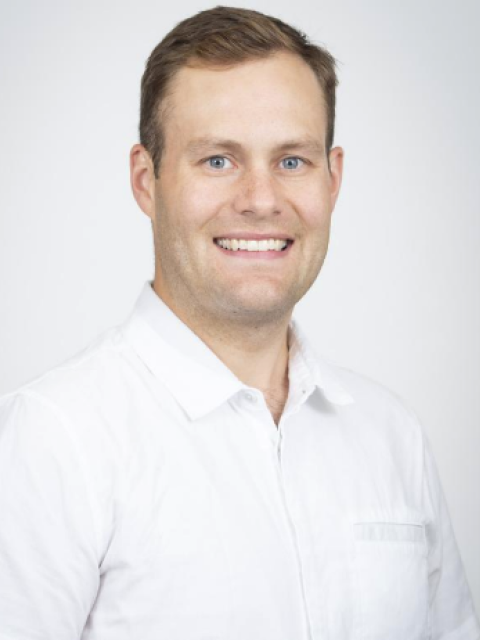
Dr. Bell is an emergency physician in Calgary, Alberta, Canada. He is active nationally within the Canadian POCUS community and is currently the clinical practice lead for the CAEP Emergency Ultrasound Committee. Colin was previously the POCUS director for the Emergency Department at the Kingston Health Sciences Centre. He completed his POCUS Fellowship at the Denver Health Medical Centre in 2016. Colin is active as a POCUS researcher. His focus is POCUS education and automated technical skill assessment. He is a passionate advocate for image archiving.


Dr. Hipskind is a board-certified emergency physician in Visalia, CA. He is active nationally within the POCUS community. He currently is assistant medical director of emergency ultrasound at Kaweah Health. He also is Kaweah Health’s EUFAC accredited emergency ultrasound fellowship director and its ACEP CUAP accredited graduate medical education ultrasound director.
Dr. Hipskind did his emergency medicine residency at Cook County Hospital in Chicago in 1995 prior to the widespread use of POCUS. He became an early adapter using radiology leftovers, listened to US based podcasts as they became available, completed his POCUS fellowship through the Ultrasound Leadership Academy and is now Advanced Emergency Medicine Focus Practice Designated through ABEM.
Dr. Hipskind is active as a POCUS educator. His focus is on optimizing end user workflow and in improving coding for billers and reimbursement for end users.

Dr. Ferre graduated from the Medical College of Wisconsin and completed an emergency medicine residency at Maine Medical Center. Following residency, Dr. Ferre served 3 years on active duty for the United States Air Force as the Emergency Ultrasound Director for the SAUSHEC EM Residency program. After separating from the Air Force, he completed an Emergency Ultrasound Fellowship at Palmetto Health Richland in South Carolina.
Dr. Ferre spent 9 years at Vanderbilt University Medical Center where he founded the Emergency Ultrasound Fellowship and the Emergency Ultrasound Division. He currently serves as the POCUS Division Chief in the Department of EM and is the program director for the Indiana University School of Medicine POCUS initiative.
An avid teacher of POCUS, Dr. Ferre has trained thousands of students and physicians of all different specialties throughout the United States, Guyana, Nepal and Iraq.
This educational webinar is intended for healthcare professionals and not for patients or consumers. The material is provided for general educational purposes, as a reference and a supplement to professional experience, education and training, and should not be considered the exclusive source for this type of information. The presenter in this webinar is a paid consultant of FUJIFILM SonoSite, Inc., and is sharing the presenter's own views and opinions that do not necessarily represent the views and opinions of FUJIFILM SonoSite, Inc. This educational webinar is not intended to recommend any device for a particular indication or to provide indications for use for any device. At all times, it is the professional responsibility of the practitioner to exercise independent clinical judgment in each particular situation. Fujifilm assumes no responsibility or liability for any misuse of the information imparted in this webinar. This educational webinar does not supplement, replace, or supersede device labeling, including instructions for use, which accompanies any FUJIFILM Sonosite product.