


1. Preventing waste and extending battery life
Follow the product instructions for charging, storage and use to help extend battery life. Do not expose the battery to temperatures outside the recommended range. Where available, use the manufacturer’s repair, reuse or repurposing options before replacing the battery.
2. Separate Collection of Waste Batteries
In accordance with Article 64 of EU Battery Regulation 2023/1542, Do not dispose of this battery with unsorted household waste. At end of life, keep it separate and take it to a designated waste-battery collection point so it can be properly treated and recycled.
3. Collection Points & Take-back
End-users may return waste batteries free of charge to designated collection points, subject to the applicable local collection arrangements. The following resources can help identify collection points:
- France: Où déposer les piles et batteries ? | Service Public
- UK: Batteries | Recycle Now
- Germany: Recyclinghof und Wertstoffhof finden – Öffnungszeiten deutschlandweit
- Spain: Encuentra el punto limpio más cercano
4. Safe Handling of Waste Batteries
Do not open, crush, puncture or short-circuit a waste battery. Keep it away from heat and ignition sources. If it is damaged, leaking or unusually hot, avoid contact and follow the applicable local guidance for safe handling and return.
5. Meaning of Battery Labels, Symbols and Markings
In accordance with Article 13 of EU Battery Regulation 2023/1542, all batteries, as well as their packaging and accompanying documentation, shall be marked with uniform mandatory labels and symbols specifying battery properties, instructions for use, and disposal requirements. End-users shall duly observe these essential markings.

CE marking: The CE marking is a mandatory EU market conformity mark for all battery packs placed on the EU/EEA market, fully compliant with Regulation (EU) 2023/1542. Affixed by the manufacturer, it serves as a formal declaration that the battery pack meets all unified EU statutory requirements in terms of safety, human health protection, environmental protection, sustainability, labeling and traceability.
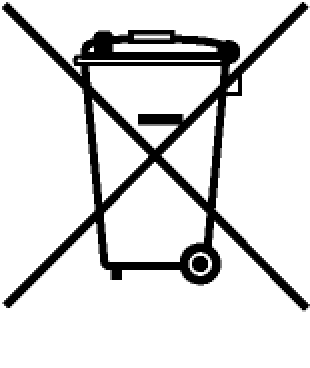
Symbol for separate collection of batteries: The most core identification mark, indicating that the battery cannot be discarded as ordinary municipal waste and must be separately collected and professionally recycled. This mark applies to all battery types covered by the regulation.
6. Environmental & Human Health Impacts of Improper Battery Disposal
Batteries may contain a variety of heavy metals and hazardous chemical substances. Improper disposal behaviors such as random littering, discarding into unsorted municipal waste and private burial will cause irreversible damage to the ecological environment and human body.
6.1 Hazards of Internal Hazardous Substances
Common hazardous battery substances include lead, cadmium, mercury, lithium compounds, electrolyte organic solvents and heavy metal complexes. These substances have toxicity, persistence and bioaccumulation, and cannot be naturally degraded in the environment.
6.2 Environmental Impacts of Improper Disposal
- Soil and water pollution: Randomly discarded waste batteries may leak hazardous substances after housing corrosion and aging. The toxic substances penetrate into soil and surface water, pollute groundwater and farmland soil, destroy soil microbial structure, and cause long-term land degradation.
- Atmospheric pollution: Waste batteries entering domestic waste incineration links may decompose and volatilize toxic gases at high temperature, producing harmful flue gas and particulate matter to pollute the air.
- Ecological chain damage: Heavy metal toxins may accumulate in water bodies and soil, enter the food chain through crops and aquatic organisms, and cause long-term cumulative pollution to the ecological system.
6.3 Human Health Risks
Chronic poisoning hazards: Long-term intake of food and drinking water contaminated by battery heavy metals may damage human nervous system, hematopoietic system, liver and kidney organs, causing chronic poisoning, memory decline and metabolic disorders.
Acute safety risks: Improperly disposed lithium batteries are prone to extrusion short circuit and spontaneous combustion in garbage collection and transportation links, triggering fire and explosion accidents and endangering personal safety.
Long-term hidden dangers: Hazardous substances have a long residual period, which may cause intergenerational health impacts and hidden dangers to public environmental safety.
6.4 Consequences of Non-standard Disposal
Discarding waste batteries as unsorted municipal waste or littering violates EU environmental protection and waste management regulations, may lead to waste of recyclable metal resources, aggravate regional environmental pollution, and bring potential legal risks to end-users.
Disclaimer: This guideline is compiled in full compliance with EU Regulation 2023/1542. If there are updates to EU official regulations and member state local implementation rules, the latest official standards shall prevail.