


Transcript
- So welcome everyone to the Fujifilm Sauna site
behind the scan webinar series.
My name is Lisa Francia,
and today we have an exciting panel discussion.
But before we begin,
please be advised all attendees are muted.
You may type questions into the q
and a box in the toolbar located at the bottom
or side of your screen at any time.
This webinar w is recorded and we will conduct a q
and a session at the end of the program.
Now it is my pleasure to introduce our moderator, Dr.
Dku.
Mia joined PITE as a medical advisor in 2007
and currently serves as the Chief medical officer
for both Fujifilm, Cy and Fujifilm Medical.
He is also a clinical associate professor
of emergency medicine at the University
of Southern California
and was an attending staff physician at Cedars Sinai Medical
Center in Los Angeles from 1998 to 2010.
Dr. Mania is a founding member
and past chair of the ASEP ultrasound section
and co-author of the ASEP ultrasound guidelines.
He has taught thousands of physicians worldwide,
lectured over 200 medical conferences,
and has been awarded asep outstanding speaker of the year.
Dr. Mania has also contributed over 100 publication
and has co co-directed the National Res
Resuscitation Conference.
He received his medical degree from Memorial University in
Canada, completed his residency at Los Angeles County
and USC Medical Center
and is a graduate of Stanford Executive Program.
Welcome Dr. Manilla.
- Thank you, Lisa. It's a little humbling this list
listening, all that, but thank you.
I'm actually have a peer group
that is far more excelled than I've ever done,
and it's really exciting to have them all here today.
We're actually all broadcasting from the Western
United States where we're not only in a pandemic,
we're in a middle of a, a crisis with, with
with the air quality that we could barely go outside today.
So I wanna thank our panelists for joining us
despite having a lot of clinical duties
and really understanding the importance of,
of being here today and really spreading the word about
the value of point of care ultrasound.
So with me today, I want to sort of introduce our speakers,
which I think are a really phenomenal group, sort
of a diverse group,
but we could talk about the trends in point of care,
which is something really excites me if I see what's
happened longitudinally over 20 years,
what's happened in point of care.
I would say that today we're still scratching the surface
and I think that as we listen to our panelists,
we'll realize that there's so much more that can be done
and it's really an exciting time.
So with with that, I'm gonna introduce all of our panelists
and the first one I'm gonna introduce is Dr.
Rahul Desai. Rahul is a MSK
and interventional radiologist has a very
interesting practice.
We're gonna learn about how he integrates point
of care medicine
and his skillset in imaging
to really improve patient outcomes where really in a,
in an area that no other specialties
have sort of put together.
So it's, I thought it was really interesting, Rahul,
when we talked before, Rahul completed his medical school at
the Medical University of Ohio Radiology at the University
of Toledo and his MSK
and Spine Fellowship at Washington University.
And he's currently practicing just outside of Portland,
Washington, and I believe you might have the worst air
quality index among the panelists right now.
Rahul also with me today is Dr.
Lale Garabedian Lale
and I know each other for many, many years.
I've had the pleasure of knowing her and,
and working side by side with her
for many years at Stanford.
Nale is not only a a, a very well recognized point
of care ultrasound export.
She has a, an incredible academic background.
She did her medical degree at UCI completed emergency
medicine there as well.
Went on to do a fellowship at Stanford where they obviously
saw the talent there and recruited her to stay at Stanford
and she's done some incredible work at Stanford.
Not only has she run the ultrasound program there for many,
many years, she now runs the actual medical adult
emergency department
and she's done a a lot of work in point of care education,
particularly in, in the online world
and in the digital space.
So we're gonna hear a little bit about that
and rounding up our, the rest
of our panel is Dr. David Ramsey.
David is an anesthesiologist who's really broadened
from his sort of core anesthesia space, so really made point
of care, his space,
and he did his medical degree at the medical college.
Georgia did anesthesia at Loma Linda
and went ahead and,
and did a cardiac anesthesiology fellowship at UCLA.
So obviously he's very familiar with ECHO and te,
but he's really broadened point
of care within the specialty of anesthesia.
And we're gonna talk about that,
about whole body ultrasound.
Some of the things that you've written, David,
which I think are really interesting.
David currently is the director of research
and perioperative ultrasound at Loma Linda.
So that's our panel, which I think is a great panel to sort
of talk about the many different
facets of point of care ultrasound.
And I've got a whole bunch of things to talk about
and this is meant to be a conversation my senses we will
have a lot to talk about.
But one of the first theories I wanna talk about,
which I think crosses a across all the specialties is really
education right of us started somewhere in the path
of point of care ultrasound with some training.
Obviously classically it's workshops, hands-on training,
which obviously are foundational,
but there's a lot of new interesting things going on today.
And so I'd like to talk about education and,
and point of care ultrasound.
So just with that as an opener, lolly,
I know you've done a lot in education and, and,
and particularly on the digital side.
What are your comments around that?
- Well, thank you for having me
and education and point-of-care.
Ultrasound continues to be very, very important.
We need to train as many physicians
and advanced practice providers, nurses, anyone
who has two hands in the healthcare industry
that can pick up a probe for a variety of reasons.
For me as an emergency physician, it's
because I absolutely know that it saves a life.
It's optimal for patient safety.
It's best for patient experience.
It decreases procedural complications.
I can go on and on,
but it's still important to be able to,
to train our medical students and our emergency residents
and of course all other specialties
where ultrasound is relevant to their practice
because you'll be able to get a timely diagnosis
and thus timely intervention and treatment.
And traditionally it could be lectures, looking over videos,
hands-on experience.
And now with the online platform,
I have definitely taken full advantage of that
where I've created a blog site of sonos spot.com.
I created an online game called sono do game.com
where anyone from really any specialty who wants
to learn ultrasound can do it in that way as well.
It doesn't take away from hands-on experience.
I think that hands-on training is still essential
and in COVID times that's been compromised,
but the more people who learn it,
the better best for your patients.
- David, any comments there from, from your vantage?
- Yeah, no thanks, dku again, also really excited to be part
of this panel and be part of this discussion.
It's gonna be a lot of fun. Again, I just reiterated again,
it starts with education.
You know, you have patients experiencing these acute events.
Any provider that's involved in those acute care settings
should learn how to use point of care ultrasound.
We know this, the research world has showed this.
As Anes anesthesiologist you mentioned, I took upon myself
to learn point of care ultrasound despite getting formally
trained in trans esophageal echo
and advanced echocardiography training.
I saw there was still a gap
and point of care ultrasound helps me answer those gaps in
many acute settings, which formally wasn't really a process
for the specialty in the perioperative arena.
Now it's great to see how
that's coming more and more online.
I look forward to discussing that
and how it's really kind of revolutionized a little bit
more, more every year in the preoperative setting.
But it goes back to awareness
and then education avenues to be able
to do something with that awareness.
And the online platforms that have been created by several
of this, the people on this panel are phenomenal
to get people a a starting place.
And I look forward to seeing what now, you know,
if there's any positive about COVID this, right,
this ability for us to embrace online media for us
to be able to be engaged with smartphone devices and,
and figuring out the full potential of that,
I think has gone leaps and bounds now
because of the current pandemic situation.
And I look forward to seeing how point-of-care ultrasound
embraces that concept.
This is talking about augmented reality, virtual reality,
as well as these types of connections to improve the quality
of care and education we can provide on a wider scale.
Because we know that there's still,
as you mentioned when we first started,
we're just scratching the surface for the number of people
that could get utility if they just got the education.
And yeah, looking forward to seeing how
that continues over the years.
- Great. And how about you Raul?
And obviously you come from a specialty which is already
expert in imaging,
yet you're doing some very interesting things
where you're adding a lot of procedural competency,
which obviously is another skillset that needs training.
What, what, what are your comments on
training and education?
- Yeah, I think it's really, you know, it's interesting
that I did a musculoskeletal fellowship
and my training was really heavily, they relied on MRI,
obviously X-ray CT
and then the interventional components of that
and ultrasound at that time I was lucky,
but I had to actually leave my fellowship training
and go up a floor.
I was training at WashU and Bill Middleton was there.
And so I got some hands-on training
and a little bit of exposure to that
and was able to build on that base.
But it, there really, really wasn't a lot of exposure
to musculoskeletal ultrasound in the
traditional radiology residencies.
It's been a long, a lot of gray hairs here,
so it's been a while since I've been in training.
So they might be changing, you know, over time,
but still, I think there's, even within a imaging field,
there's a lack of understanding of the capabilities.
I think another thing that, you know,
I'm in a private practice in, you know,
it's not an academic center
and so there is a significant difference to the exposure,
right inside kind of the clinical expertise.
So I think one of the parts
of the education is not only educating clinicians
and all the different providers of how to utilize this
and where it fits in, but also just the capabilities
that in the hands of, you know,
as our expertise improves the capabilities, you know,
exponentially grow.
So some of the things that we do,
we never even knew that it was possible.
And so I think that that's another thing is just
educating our, we do that in the community,
is educating the community of what the,
the power of ultrasound is.
So I think there's a couple of different components of,
of education is one, is they actually doing and interpreting
and using like image guidance
and then also explaining
to our community our broader community of providers
and clinicians and also patients of the power
and utility of the ultrasound and especially point of care.
- Yeah, absolutely. That makes a lot of sense.
And in fact, I'm just watching the questions come in here as
as we're talking and there's a question about
really about competency.
How do we ensure physician are trained, right?
So do we have a now much more access
to devices, which is great.
Of course education is foundational to ensuring
good training and how do you measure the quality?
And that might lead me to something David, you
and I talked about earlier about the A-C-G-M-E
and A CG E'S role in, in ensuring quality.
And I know anesthesia made some mo some
very recent moves on that. You wanna talk about that?
- Yeah, no, absolutely. Very excited to report that in 2019,
the A-C-G-M-E did add topics under point of care ultrasound
to requirements for anesthesiology residency training.
This was transthoracic ultrasound as well
as pulmonary ultrasound.
And before that,
emergency medicine was really the only specialty
that had it formalized robustly in A-C-G-M-E
requirements and so excited.
You know, one thing to point out though,
and I look forward to the discussion,
if you look at the number of year gap, 14 years from,
from time to, from
where anesthesiology put it on as number two.
So there is definitely a gap there from when the topic
became relevant for acute care physicians
to when it became part of, of required training.
But nonetheless, we're here
and excited to kind of see how that continues and grows.
- Absolutely. Any comments, Lale or Rahul around A-C-G-M-E?
- It's definitely been a wonderful addition
because we can say as emergency physicians, our scope
of practice includes point, point-of-care ultrasound.
We don't need extra credentials or certificates
or anything like that.
If we graduate from an emergency medicine residency,
that means we should be competent in the applications
of point-of-care ultrasound as per A-C-G-M-E
and it's forced the residency programs to train
their residents to do that, which means you need
to have ultrasound trained faculty at your institutions
of training in order to ensure quality control.
- Yeah, for, for me it's interesting
because I'm a sometimes a fish out of water
with musculoskeletal ultrasound
and interventional procedures
as a interventional radiologist
and a clinician, we, you know,
we have founded an organization called the Interventional
Orthobiologics Foundation.
I won't get into orthobiologics,
but really the foundational pieces of that is education.
A lot of it's diagnostic
and then the ability to properly place, you know, needles
and using those techniques on a higher level.
And we have a certification program.
The challenge with that is that we have, you know,
different physicians from different specialties
that are coinciding on that, on that type of care model.
So as a radiologist, we have a lot
of interventional physiatrists anesthesia.
And so creating that
educational platform is really important.
We've, we've done a, we've had the forefathers of, you know,
my involvement have been critical in getting
that education there
and now we're seeing that there are
A-C-G-M-E accredited programs in these modalities.
So I think that will continue.
And I think one of the proper ways of doing
that is in incorporating it within the
residency and fellowship training.
And then if this can be kind of a platform for that,
for launching that, and especially in our musculoskeletal
world, I think that's really important.
- So those are all good points.
And you know, the, the discussion we just had is really,
really largely focused around the academic centers, right?
That's where A-C-G-M-E really plays a big role,
but of course health systems comprise
of academic and non-academic.
And I've been having a lot of conversation
with health system leaders that want to adopt point of care,
but have some trepidation around training and credentialing
and competency, which I think are fair.
And I think because you, you look at health systems
and you'll have differing variance of adoption
and, and competency.
So anyways, I I think it's something that's still evolving.
I think what's exciting is the health systems are looking at
it and, and they're gonna look at it system wide.
I know from the, so site side, we spend a lot
of time in education.
We have the, so site institute, which is built exactly
for those sorts of environments
where you can do online training.
And now we also have synchronicity,
which is a workflow manager to allow us archiving and QA
and credentialing, that sort of thing, which is a,
a really important part of developing an ultrasound program.
I bring all this up 'cause this is really foundational
to the other things that we're gonna talk about, right?
Really the more exciting things.
But we gotta get the basics down
'cause we, we wanna make sure that we do this right, right?
That if we adopt things like we're gonna talk about
TE shortly, right?
We better make sure we have all the foundational components
right before we jump into different areas.
So maybe we'll just switch
after we sort of discussed a little bit about education.
So I'm gonna flip it completely opposite
to whole body ultrasound.
Okay? So that's a concept that you know,
which is very interesting, right?
So when I started ultrasound, we started doing
what the radiologist did, right?
It sort of made sense, right?
The radiologist did a gallbladder, we did a gallbladder,
radiologist did aorta, we did aorta.
But point of care. Now it's exciting.
You give this technology to clinicians, they are trying
to solve a problem, right?
So they'll use that technology
to solve their problem, right?
And what's happened is that point of care has grown not
to just certain body areas,
but really now we're talking about whole body ultrasound
and emergency medicine certainly started doing a
lot of whole body ultrasound.
Now we're seeing other specialties adopting the same
approach for a lot of good reasons.
And so I wanna talk about whole body ultrasound.
Let's start with you Lale,
you've been doing this for a long time.
You've seen a lot of applications grow, right?
So what are your concepts,
what are your thinking thoughts around whole body?
- You know, it's interesting. I actually love the concept
of whole body ultrasound.
I used to say in my training,
and this is now 13 years ago, that
with point-of-care ultrasound I scan from head
to toe and skin to bone.
So if that's, that's the definition of whole body scanning
because you truly do.
And the return of investment for
that is significant and you know, I mentioned it before,
but it's worth saying again, you know, patient safety for
that, the time to diagnosis, the patient's experience,
the decrease resource need the throughput
that gets optimized
because you are able
to perform the ultrasound anywhere on the body.
And anyone who sees a patient primary care,
absolutely ICU anesthesia, emergency medicine things,
you know, you get patient populations
where it's absolutely relevant.
So I, I'm all for it.
I think it, it should be defined such that, you know,
it's not relevant for every single specialty for sure,
but it's a concept I've been talking about for a long time.
- Okay, very good. And so how about you David?
I know you, that's a particular passion of yours
and you actually have a, a protocol
that you develop called the foresight protocol.
So gimme your thoughts around this.
- Yeah, no, this is
fundamentally what's driven me in academic medicine is this
concept of broadening the, the concept
of whole body ultrasound to a variety
of acute care specialties.
And just to kind of touch back on my background, you know,
so during my advanced TE training
and fellowship, I got exposure to transthoracic echo.
And then shortly, this is 10 years ago, as an starting off
as an academic attending,
I found myself doing many more transthoracic echoes
for colleagues and events than I ever was doing te And
that very much exposed me to the topic of the idea of point
of care and then leaning on to very mu, many much
so on the emergency medicine side from colleagues, friends,
learning how they were doing it.
And just very intuitively came to the idea that wow, they,
I have patients who are short of breath too,
but they're doing point of care in the er,
but why aren't we doing it in the perioperative setting?
I have patients who have chest pain,
I have patients that are hypotensive.
The vast majority of acute events
that happen are not patient location specific, right?
It's a patient that has those morbidities and complications.
And so that logic became very
strong in my mindset of trying to develop a strategy
for the perioperative setting
to incorporate point of care ultrasound.
And so that led to developing a curriculum,
which is our approach of basically looking at
what had been out there, this is back in 2010 on the space
of point of care ultrasound and saying, Hey, what's relevant
for the perioperative setting?
Is it relevant for us to learn about the heart? Yes.
Is it relevant for us to look
for free fluid in the abdomen after surgery?
Yeah, probably makes sense. What about additional new topics
like gastric content is, you know, obviously a big thing
that's a concern
for the perioperative environment is MPO status.
Well, does ultrasound help you evaluate that?
Turns out, yes. And so why not incorporate
that on ICP assessment?
Because we deal with alter mental status,
acute changes in mental status,
and we try to take this head to toe approach
and integrate that into a curriculum,
have published on its utility and
and launching it as a clinical service,
as a training program for residents.
And it's been exciting to see how that's grown and adopted
and, and now, you know,
there's committee at our national level
that has now looked at point of care ultrasound and,
and talking about ways of, of strategizing in some sort of
strategy for guidelines and education route towards.
So it's an exciting time because I think more
and more now it's going out outside, outside
of just research to actually saying how do we improve this
to a new standard, you know, in both in the academic setting
and hopefully outside of the academic setting.
So yeah, so past 10 years has definitely been a,
a very exciting kind of growth in this space.
And again, it all goes back to the patient realizing
that you are just so much, you are able
to be a better physician
or healthcare provider when you apply POCUS versus just
trying to do what else is available at the bedside.
And that, I think resonates with
so many different healthcare providers
and we know we just on our job to advance medicine
through education and, you know, allowing technology to,
to make its way through all these
different patient care settings.
- No, absolutely. If you, if you think of point
of care ultrasound, like a Swiss army knife
for healthcare, right?
You're gonna pull out a different blade
for a different problem, right?
In our world that would mean a different transducer
and we actually see similar problems like you're saying.
Right? And what I really like right now about really not a
specialty, but more the point
of care community is this sharing of, of knowledge.
And I'll give you a good example.
We could start talking about this one.
Nerve blocks give you, that's a,
that's a very interesting one
and really nerve blocks
of course started within anesthesia, right?
There's no question about that.
And, and still the vast majority are done there,
but the big but is
that nerve blocks are done now in other specialties as well.
So let's, let's just talk a little bit about that.
Maybe maybe start with you lale
and then nerve block component
and I mean, so you're an ER doc, right?
And you know, way back when point
of care ultrasound started, someone said you're gonna do a
nerve block, they thought, you know, you,
you had heads, you're crazy, right?
But now it's something that we should all be doing.
So tell what, what are your thoughts on that?
- I a hundred percent agree
and you know, frankly, nerve blocks had been part
of emergency medicine scope of practice
for a really long time.
I think that without point of care ultrasound,
the complication rate
or the, you know, the,
the unsuccessful nerve block attempt was higher.
But then with point-of-care
ultrasound, we were able to do it.
The best patient population this is for is
for the post-trauma hip fracture patients,
specifically these elderly patient populations
where you don't wanna give systemic opiates
to these patients.
They're super sensitive for that. They'll get altered.
How are they gonna consent for surgery with that?
You want them to have immediate relief.
You wanna be able to have appropriate x-rays performed
without pain being an issue.
Of course, you have to get the appropriate physical exam
done and documented, but it's absolutely a must.
I, there are other places that every trauma that comes in
with an extremity injury, even before they go to a CT scan
or x-rays, they do a nerve block
after the assessment so
that the patient's comfort is optimized and the x-rays
and imaging studies can be done.
It's, it's, it's been revolutionary rib fractures.
That's one of the biggest new things
that we're doing at Stanford is
to have adequate pain control, to have optimal oxygenation
and respiratory effort.
It's, it's great all of us should do it.
- So David, you're probably doing it the longest
and have a lot more experience.
Tell us, what do you think?
- Well, I think it goes back to the same discussion about
how POCUS got into the perioperative space
and maybe the other direction slightly in terms of
for, for nerve blocks.
The concept if you take a patient problem, right, a,
a patient having a need, there's many patient care settings,
again, where the approach
of regional nerve blocks is appropriate.
So then it becomes on us to try to figure out, well
what providers should be involved in that
and how do they get levels of training?
And so it's been great to see that become formalized
and developed in emergency medicine.
And, and so I,
and you know, then there's other
strategies that involve it as well.
But either way, the, the idea of going back
to a patient problem
and finding solutions to that patient problem is key.
And I, and it's been exciting to, to kind
of break down the silos.
I don't want, you know, the, the reason why if you see me
kind of pausing and humming hawing is
because there's definitely a silo to healthcare
of people branding themselves as a given spec specialty.
And that specialty that
therefore includes these procedural aspects, right?
That's more and more as we all start to talk and communicate
and share knowledge and,
and collaborate more is starting to get break broken down.
And I think regional nerve blocks is a
perfect example of that.
And so it's very exciting
because at the end of the day, I don't think anyone can
argue that there's patient benefit, right?
Especially because you now include ultrasound
and so safety now becomes a much, much higher plane.
You could have made the argument that when you're talking
outside of ultrasound, there's risk associated
and those risks therefore may limit the ability
to wide spread the knowledge, right?
But that ultrasound has now been allow us to, to kind
of shut, not value that as much
because it's become just so much more safer.
And so, yeah, no,
I mean I'm a hundred percent same thing in our
emergency medicine department.
We have our,
our emergency medicine colleagues do nerve blocks actively.
We sometimes as a consultant go down there
and help for particular blocks
and it's, it's very collaborational
and I, I very much look forward to, you know, te
as we're gonna talk about later in this webinar.
I think that's another topic where TE is now trying to,
it's getting labeled as an acute monitoring tool
and something that can help at the bedside as well.
And so that is another example of
how we're breaking down these silos
because one, the tech is more available
and two, I think people are realizing the power of it.
- No, absolutely. So, you know, nerve blocks it,
it's very interesting.
A few years ago I was in Ubad in India at a conference
and I, I really love learning from
physicians in other countries, right?
And the physician told me sort
of a concept like we caught just talked about
whole body ultrasound.
He said block on arrival. Block on arrival.
Think about that, right?
Because I mean some
of you may have been in hospitals in other countries
and you there, their volumes are overwhelming, right?
And you imagine having patients there that are there
with tibia fractures, femur fractures, you name it.
And it's gonna be a while before they get imaging,
before they get actual care.
But if you did block out arrival, wow. Right?
So, you know, you couldn't do that before ultrasound.
And so, you know,
the other thing which this obviously relates into
before the COVID-19 pandemic,
we were talking a lot about the opiate crisis, right?
Which is absolutely tragic here in the United States
where we have way too many patients that are addicted
to oral opiates or other forms of opiates
or other, even other drugs
and avoiding those completely
or at least significantly, right?
And whether it's in the perioperative stage
or even in the acute stage, et cetera.
So I know Rahul, you do a lot of
important procedures, right?
Because patients come to you because primarily
'cause of pain, right?
And, and so tell us about that
and how are you using your procedures and,
and blocks to really resolve pain?
- Yeah, I think, you know, we have trended away from the
moniker of pain management and you know, just
because of that we would like to,
I think there's a better way
and part of that is as a radiologist really
focusing on the diagnosis.
Pain management has traditionally been, you know,
about treating the symptoms.
And so, you know, nerve blocks
or those things with corticosteroids, I have this, you know,
a saying that steroids
or close only counts in horseshoes
hand grenades and steroids.
You can kind of get 'em close and it, it helps,
it makes it feel better,
but the pain's gonna come back, the issues are come,
gonna come back and you're not getting
long-term, you know, benefits.
And so really I have like a three legged stool
of our treatment pattern is precision diagnosis,
know precision medicine and then precision delivery
and all that really predic is predicated around imaging
and especially with ultrasound, that's been a,
a fantastic tool
and you know, the patients oftentimes are coming in
and we see patients, unfortunately we get a lot
of referrals from the community when they're not
able to figure things out.
And so, you know, a lot of time is spent on diagnosis
and sometimes it's very simple.
We can look at the imaging
and I think there's a big schism between the imagers.
Sometimes the radiologist is in the, you know, basement
of the hospital and then the clinicians
are getting the reports.
They're not even looking at the imaging
and you know, sometimes treating the wrong issue.
And so part of it is making sure that that fits.
And so we do diagnostic blocks just sometimes
with anesthetic, just making sure that
that's actually the, the pain generator.
One example of this using ultrasound, we had a patient 91
and I think it's really relevant kind
of COVID was planning on getting a hip replacement,
severe hip pain COVID hit, they had to stall it went back
and that was scared to go to the hospital.
And so I don't want a, a hip replacement.
They were sent to us
to look at a potential regenerative therapy
and when I evaluated him, you know, all the pain was at the,
the Trocanter area
and he had seen the, the surgeons,
I used diagnostic ultrasound and did an examination
and he had definitely had arthritis,
wasn't terrible, no effusion.
And he had calcific tendonitis of his gluteus media
Walked around the, so we injected him with anesthetic,
he walked around the clinic and no benefit.
We injected the bursa
and the tendon area with the
calcium a hundred percent relief.
So he would've had a hip replacement unnecessarily, right?
And so when we see this every week, situations like this.
And so I think the importance is really, you know,
really getting the right diagnosis
and sometimes it's the nerve if it's a neuropathic pain
syndrome when we block the nerve specifically
and you can get relief when we found that as well.
So I mean I think the, the power in utility
of POCUS is amazing.
- Yeah. You mentioned a case the other day,
which I resonated with kind of a colleague
with a similar sort of problem where, you know,
you'd look at an MRI
or a handful of physicians look at, oh yeah, you know,
you clearly need surgery or whatever,
but you are looking at these patients differently, right?
You, you're looking at these patients,
you're looking at the MRI, but then you're adding ultrasound
and you're seeing more. Tell us about that.
- Well I think the, the word that I was using it is
that it's a additive imaging modality.
It's not redundant. And I think that in the community, a lot
of folks think that the ultrasound is redundant
to the MRI and it's not.
So one of the clear examples that I'm seeing
and we wanna publish,
we're getting the cases together is a lot of patients
with car accidents or simply just, you know, neck
and shoulder pain will come in
and we'll do obviously shoulder examination ultrasounds very
standard in musculoskeletal medicine.
And so we'll do that. But you know,
if they're having peri scapular pain
or if they've had a car accident
or trauma, then what I've done is at a standard is
to look at that, at least ifs laterally on that same side,
look at the facets.
And what we're finding are facet arthritis,
facet inflammation.
And what's really interesting is it's very clear,
you see s spurring, you see a fusion
and then you look at the MRI
and I can't see it, I have a musculoskeletal fellowship
trained radiologist and I can't see it even retrospectively.
And so I'll go back and then everybody has
C five six disease.
So they get epidurals
and you know, they don't get any better.
But you simply place the, the probe, it's
so shallow in most patients and you can see it.
And there's also soap palpation so you press on it
and it's concordant with their issues even can
inject it even at that.
And that's the whole, like if we can get this together,
imagine you get to go see the physician,
you get your diagnosis, you get your injection,
and you walk out of there feeling good,
that should happen at the same time
before it's three different visits.
You come in, you get evaluated, you get sent for imaging,
you have to come back and they talk about the imaging
and then you have to come back again, you know,
and get the treatment.
And so really this,
the whole paradigm should shift towards that.
But this is just one simple example
and we're seeing it in many different areas.
How there's con there is novel diagnosis
or things that we're missing
and this is filling in some gaps.
- I think there's a really important points, I mean
as physicians that sort of, you know,
we shutter when we hear that, right?
Because you know, classically you'll be sent to say
to an orthopedic surgeon who will just look at one image,
not look at an ultrasound
and they will go down a certain pathway, you know,
maybe an operation et cetera like you mentioned.
So there's so much more that we can learn of
how we put these together,
these modalities together at the point of care
and actually trying to put those data points together
to solve the, the patient's problems.
So we talked a little bit about MSK, just curious
Lale MSK.
So that's another interesting area, right?
So emergency medicine didn't start off doing MSK ultrasound
and M mss K is very broad, right?
You get the bones, the soft tissue, you name it.
What do you, what do you think about
what's happened in MSK within emergency medicine?
- It's definitely expanded through the last several years,
which is really exciting.
And the cases, you know, that I can think about are cases
where there's a partial achilles tendon tear
and you can't really rely on an exam to rule in
or rule out something like that.
The ultrasound absolutely can help you identify it just like
Rahul was taking, talking about ultrasound of the shoulder.
We also can do dynamic ultrasound
where we look at the function of each of the muscles
as they go through the supraspinatus TE minor, the,
you know, biceps as it goes through
and as it inserts, you know, these kinds
of dynamic ultrasound musculoskeletal techniques have
been hugely additive to our ability to assess
and correctly diagnosed what the issue may be
to then ultimately have the patient go
to definitive treatment
or not, depending on what we find
with the correct specialists.
It's been really great also to collaborate
with our orthopedic colleagues when they come in
as a consultation and I show them the ultrasound images.
They love it. It's, it's really
exciting, really fascinating.
Especially because that's something
that is increasing in their specialty too.
So the more the merrier.
- Yeah, it was interesting. In this month's annals
of emergency medicine, there was a study on use
of ultrasound for shoulder dislocation,
right in the pre reduction post reduction.
Another example of changing the care pathway.
And I know we're not really gonna talk about global health,
but you think, and I know a lot
of you have done some international work
in those resource limited settings that this technology,
as we talked about all these different areas
can play such a, a phenomenal role.
Let's switch to echo.
I know we wanted to talk about echo
and it's, it's really exciting to see the,
the growth of of echo where, you know,
where we just started at the beginning just looking at the
basic user heart, looking at effusions sort of basic
and now we're moving to really much more
advanced echo, right?
Where we're looking at EF cardiac output,
we're doing monitoring, we're actually going into other ways
of looking at the heart such as transesophageal.
Another good example where you know, a number
of years back it wouldn't have been thought that physicians
outside of cardiac anesthesia
or cardiology would be doing te
but that's no longer the case.
So le let's start with you David.
You obviously have been doing this a lot.
Tell us about echo in general.
'cause it sounds like interesting lump you probably started
with TE and then what to transthoracic versus most
of us sort of the other way around.
- Yeah, no, I mean, yeah that's exactly my, my timeline of,
of kind of training the environment's changing continuously
and with, when it comes to ultrasound
and TEA is just a component of that.
I think more
and more people are tuned that there are the TE examination
that is diagnostic
and is a formal study to evaluate for procedural aspects,
cardiac surgery, advancement of known disease.
And those are, you know, exams that will always remain
as those formal diagnostic studies.
But again, when you go back to the idea
of patient care events labeled with the as acute events
and how you can use modern day technology to improve that,
it opens up this new point of care T topic
where you can now say there's scenarios
where surface ultrasound's just not gonna cut it,
but you really wanna know
and TE exists now in those patient care settings
because of advancement in technology.
Why not, right?
Like if it's helping you address those acute
questions, it makes sense.
And so I think it's, you know, a lot of it has to go
with appropriate labeling
and appropriately defining what the role is
and not going beyond it to talk about, you know, I I,
there was a consultation about a year ago from
a a point of care physician
who was doing a TE exam
and thought there was aortic valve mismatch
because the person just had aortic valve surgery.
That conversation might not be, I would say the most common,
or actually I would go as far
as saying probably not appropriate
because it doesn't quite make sense for that.
I don't see how that, but if you are talking about acute
events and being able to use TE for, you know,
acute resuscitation, somebody who's undergoing A CLS
and you know, just when again,
surface ultrasound's not an option, it definitely, there's
so many avenues where that could be useful
and it's been exciting to see.
And we actually work in partnership
with our emergency medicine colleagues here at Loma Linda
to help with training on the topic of rescue t We label it
as sus, we, we identify it as the acute T exam
and even to broaden that in the back
to the perioperative space.
We are, we also train non-cardiac anesthesiologist on basic
transesophageal echo exam because it's more
and more evidence showing that there's utility
for a wider subset of perioperative physicians
to learn basic transesophageal echo
because it's not completely always tied into
just cardiac surgery.
So yeah, the, the, the whole spectrum is expanded.
- No, I I think it's really exciting.
The, the entire field of resuscitation, if you look over,
over even just the last decade, how many new interventions
that we have for resuscitation
and that gets us into ECMO and all these other areas,
but TE is, is now been recognized
as a critical tool in resuscitation.
And resuscitation is a team sport, right?
And we're gonna work with our anesthesia colleagues,
our surgical colleagues, our cardiology colleagues,
other physicians involved in with the critically ill.
So Ally, what, what are your thoughts on TE and,
and what are you guys up to?
- Well, pre COVID times we were just starting
to develop some sort of protocols
because we do have new TE probes
and we haven't really put it into practice yet except
for studying its benefit.
And with various of colleagues around, we were part
of a multi-site research study
where it looked at the benefit
and there are several, something as simple
as adequacy of chest compressions
where you know the location of where the heart is
and you will be shocked at how often we're wrong at
where we're compressing and how deep we're compressing.
Of course the diagnostic benefits of it, is it tamponade?
Is it a pe you know, things of that sort cardiac standstill
and the need for pausing
for a pulse check is eliminated with that.
You can continue resuscitative efforts without a pause
in resuscitation.
I can go on and on and I can't wait for it to expand more.
It's, I think very few emergency departments right now are
doing TEE if they are,
they're largely doing it in cardiac arrest situations
and the majority are not.
And I see that to be really
what the next expansion is gonna be an emergency medicine.
- No, I agree fully and it was nice
to see the recent guideline just a,
a few years ago advocating for point of care te
for emergency medicine.
Of course critical care is also doing it.
Obviously we know anesthesia is doing it
and the reason everyone's doing it is 'cause it has value.
Right. And I think, David,
you mentioned ultrasound being a monitoring tool, right?
I mean we've all, you know, consistently, like
conventionally you could say ultrasound started off
as an imaging methodology, right, right.
By traditional imaging physicians.
But when you put it in the hands of point
of care physicians, they're using it
as a monitoring technology monitor.
Any comments on the monitoring
element from either one of you?
- Well that very much resonates for the perioperative space.
A lot of what we look at is monitors, right?
And the concept
of hemodynamic monitoring is very well entrenched in, in,
in, into anesthesiology.
And so when you label this as another one of these tools
to improve our ability
to know what's going on in our patients,
it resonates very strongly in the preoperative space.
And I think that's one of the things
that's helped gain momentum for the preoperative space is
that labeling
and identifying, it's, it's, it's interesting
to talk about this, about
how people get hung up on certain things.
For example, if I try
to say I was gonna launch a transthoracic echo program
for perioperative physicians, the amount of
debate that would cause it would be tremendous.
But if I say I want to launch a point
of care cardiac ultrasound training program
for perioperative physicians,
that does not carry nearly the
same amount of discussion, right?
And so I think it's, it's interesting when you talk about
how you can kind of convey things and relay education
and so labeling it
as a monitoring tool I think is very useful
and it's helped, again, gain momentum
for the perioperative space
because it's sort of what our culture is.
- Oh, absolutely. It's, it's really great
to see all this sort of focus
around echo.
In fact, we've taken it pretty seriously at Sono site.
Our new PX system has been designed specifically
to excel at Echo.
And so we're really happy our systems are now being deployed
and we're getting that sort of feedback right now.
But yeah, echo and, you know, heart
and lung, look at what we're just going through right now
with COVID, right?
You've all seen the, the evidence point of care ultrasound
as playing a critical role in the management of COVID-19.
And that is something we didn't know about,
you know, back in January.
It's also, it was very interesting.
That's another example of the collaboration among point
of care physicians where in this COVID-19 pandemic,
how they were sharing best practices in point of care,
literally first outta China, then the Italian experience,
and of course the New York experience,
but absolutely phenomenal work
where the clinicians are coming together
and sharing their practices.
So I, I know we don't have a whole lot of time left
and we have a bunch of people online if you have questions,
please type them in.
I get one question here that has come in, it's
around barriers.
What are the barriers you think for more adoption, right?
We talked about sometimes many years.
What are the top barriers do you believe,
to more widespread adoption of point of care technology?
You wanna start Rahul?
- Sure. I think one of the,
the barriers is probably just the learning curve,
I would say, depending on where the clinician starts.
Especially again, I'll,
I'll discuss the non-academic centers where you're not the,
the residents and medical students
or you know, fellows, they're used to that learning curve.
But as we get out there in the community, I think there's a,
a definite learning curve for kind
of eye brain coordination, right?
You first start looking at it and it just looks like a,
a clouds I get patients, they,
they can't even tell what they're looking at.
Or if I have, you know, clinicians that are really early on
and then also for procedural techniques,
then it's gonna be hand eye coordination.
So I think there's, that's probably one barrier
and just being able to get the, the access and the education
and so using online technologies will hopefully decrease
that, that fence or that barrier.
That's one of the first things
that I see is just a little bit of intimidation to,
to jump into this new technology.
- Yeah, very good. Lale,
- You know, I I wanna say, you know,
the common things like equipment, cost of equipment
and maybe the lack of the group,
whatever specialty that is,
having an ultrasound trained person for training
and quality control of what is done.
But really what I see as one
of the biggest barriers is when people who are in a position
of leadership in hospital systems just don't believe,
don't see the benefit, don't understand the return
of investment, don't appreciate the patient safety
additions, that point-of-care ultrasound provides.
And some people think in emergency medicine that ultrasound
and this is a complete misperception, completely inaccurate
and wrong, that ultrasound is gonna slow me down.
That is incorrect.
When we have our providers who in the multiple places
that I've worked, those
who you ultrasound see more patients per hour,
the throughput is optimized so much.
Again, the return of investment is just not appreciated.
I think you need to have people in leadership positions
that are open to understanding its use.
- I think that's a really important point.
And in fact, I've got some experience with some colleagues
that have taken leadership positions at other health systems
and actually able to drive standard of care and,
and change things, right?
New care pathways. And that's exciting to see.
But you're right, there's a paucity of that right now.
It's, it's increasing, right As we are having
that generation getting into that, those leadership roles,
even like yourself of course at, at Stanford.
But you, you're right. That's an important barrier.
How about you David? Any thoughts here?
- Well, I, I think the two big ones have just been discussed
really in current, current state of things.
But I would go back to also just talking about having
structured guidelines and routes for competency.
Cer you know, certifications
and things like that for, especially for specialties
that are just newly getting exposed to the topic.
You know, documented, validated routes of education
and certificate of training are still needed.
And there's so many, and again, just
to from when we first started this webinar,
we're just scratching the surface of what type
of healthcare providers really could get utility out
of learning point of care ultrasound.
So anytime that you talk about that next group of folks,
there has to be structured guidelines, routes
for competency training, certificate certification, some way
for us to be able to evaluate that that is, you know, a,
a standard way of approaching that for that specialty.
And so, you know, we talked about A-C-G-M-E, that's great,
but for the non trainee, for the post trainee physician
or healthcare provider, those things need to get worked out
for the specialty anesthesiology.
It's in process.
And so it's exciting to see what's gonna happen
here in the next couple of years.
And that should hopefully carry over to other specialties.
- Absolutely. So this is my last question.
It's, it's a big one
'cause we have a big problem here in the United States.
We spend 18% of our GDP on healthcare
and we don't really get the outcomes
that we should for that amount of spend.
And we're moving slowly to a value-based care system
and some progressive health systems are actually making some
a good motion there, right?
In certain care pathways.
We believe, I believe that point
of care ultrasound has a big role in this
transition, certain care pathway.
So I wanna sort of a final sort of discussion points.
I'd like to talk to you, hear your thoughts around that.
Maybe we'll start with you Rahul.
- Yeah, absolutely.
I mean I'm, I'm an advocate for changing the system
for the better and you know,
the endpoints better patient care
and less stress on the, on the system.
Minimally invasive techniques are gonna be the future
of musculoskeletal medicine.
We're doing percutaneous ultrasound guided
carpal tunnel release.
We did one on a couple of Fridays ago for one of our nurses.
They're back to work on Monday, you know,
with the bandaid, no sutures.
That's the type of technology that's occurring
and it's a true carpal tunnel release
and you can clearly define the, you know,
palmer cutaneous branch or a current motor branch.
It's probably safer than a endoscopic
and obviously the return to work.
So I think all of these types of the, there's a,
a whole host of procedures
and I won't get into all of them that
are coming down the line.
These percutaneous therapies, you know, we do a lot
of disc therapies as well
and we're using ultrasound
to safely guide into like the cervical discs for access.
So it's exciting.
And so I think just the,
the morbidity post procedurally the return to work, the cost
to the system is gonna be tremendously reduced.
I have five kids that are growing up in this country
and it scares me with all these things going on.
And so we have to be stewards of our planet
and I think this is part of that.
- Yeah, very good points, David.
- Yeah, no, I mean I think the fundamentally empowering
healthcare providers to be able to do more
and be able to be more accurate with
what they think is going on.
That if you take what is the bedside tool
of choice right now, still the stethoscope over a hundred
years old, that doesn't really make sense.
Why don't we talk about including bedside ultrasound in
that avenue, training people appropriately allowing them
to have the capability to apply it the right ways
where we know the research world has shown benefit
and really expose the ability
to decrease potential consultations, unnecessary testing,
resource utilization, all these things.
Avenues all start with being able to provide the technology
and train the technology to the providers
that really can get Ben provide benefit to our patients.
And there's still so much more to do in that.
- Yeah, it's funny you bring up the stethoscope, right?
I always joke, I want to have a big bonfire
and we can get rid of them all.
We can't right now. Air quality's too bad.
But someday we will lale.
- It's a really interesting question
because I think about this all the time.
There are so many people, especially at Stanford
who are doing point of care ultrasound.
We have a fantastic anesthesia department who has point
of care experts, of course cardiology,
OB GYN orthopedic services
with their musculoskeletal critical care,
using it like crazy internal medicine at Stanford are going
around with a portable ultrasound machine during rounds.
It is phenomenal.
And I think if every single person got together to see
what the value add is,
and whether that's patient care, patient safety, monetary,
or otherwise, it would be much more than I could even
really ever imagine.
But to me as an emergency physician, I'll say
what I said at the very beginning of this, to me,
ultrasound saves a life that is a value
that has no dollar signs next to it.
That's amazing. That's amazing.
And I can go case by case of
how I became a believer in point of care ultrasound
because of a, a young life saved,
but you know, that's a whole other topic.
That's the biggest value for me.
- Wow. I think that's a, a great w way to end.
You're right. That is the most important value and
and all of you guys contribute there.
So thank you for that.
I wanna thank you for joining us today.
I think it's been a really interesting discussion.
I think we could talk so much more,
but thank you for joining us today.
I know you're taking time out to do this
and it's complicated, but I think it was an hour well spent
and some interesting conversation.
I do wanna thank the sono side team.
I know we had a lot of behind the scenes work
to make this all happen.
I'm my Zoom experts that are in the background. Thank you.
And I do want to let our viewers know
that this series is part of the series, part of our
part launch for our new system px.
And we actually have another webinar just next week.
So please go to sono site.com, register if you,
if you like these sort of conversations, you,
you'll learn a lot more about point of care
and including a better news system.
So with that, I think we're gonna, that'll be a wrap.
So thank you everyone.
Thank you for joining us this afternoon.
Learn the latest trends as your colleagues discuss how the expanded use of POCUS supports both procedural and diagnostic applications. The integration of POCUS can help improve patient outcomes, increase patient safety and reduce costs while helping physicians deliver high-quality patient care.

Dr. Mandavia, MD, FACEP, FRCPC, joined Sonosite as a medical advisor in 2007 and served as Chief Medical Officer for both FUJIFILM Sonosite, Inc. and FUJIFILM Medical USA between 2015 and 2021. He is also a Clinical Associate Professor of Emergency Medicine at the University of Southern California and was an Attending Staff Physician at Cedars-Sinai Medical Centre in Los Angeles from 1998-2010.
Dr. Mandavia is a founding member and past-chair of the ACEP Ultrasound Section and co-author of the ACEP Ultrasound Guidelines. He has taught thousands of physicians worldwide, lectured at over 200 medical conferences and has been awarded ACEP’s Outstanding Speaker of the Year. Dr. Mandavia has also contributed to over 100 publications and is co-director of the national Resuscitation Conference. He received his medical degree from Memorial University in Canada, completed his residency at Los Angeles County and USC Medical Centre and is a graduate of the Stanford Executive Programme.


Dr. Gharahbaghian is an academic emergency physician who completed her fellowship in Emergency Ultrasound in 2007 at Stanford and remained on the Stanford faculty to serve as Director of the Emergency Ultrasound Programme and Fellowship for 10 years. Now, she serves as Medical and Quality Director of Emergency Medicine. Her interests include ultrasound in medical education, quality improvement, resident education, and simulation-based ultrasound training, including procedural skills training and case-based learning for ultrasound interpretation and integration. Her research involves the study of various point-of-care ultrasound applications in the management of critical patients, in the screening of trauma patients, and in its education through simulation models.
She is a leader in the national bedside ultrasound educational impact, has led several very successful educational innovations in emergency ultrasound, including her internationally-known blog, SonoSpot.com with thousands of followers on Twitter (@sonospot) where she continues to engage with the FOAMed community. She is also the first to create an online ultrasound-focused case-based educational opportunity through gamification with SonoDocGame.com.
Due to her belief that adding ultrasound can enhance learning of the human body and disease while quickening diagnoses and life-saving interventions, she brought UltraFest, a free national medical student ultrasound symposium to Stanford, and has travelled internationally to provide educational sessions on ultrasound integration into emergency practise at various developed and underdeveloped countries and rural village clinics.
She has directed various ultrasound CME workshops and continues to instruct at several successful national CME ultrasound workshops, including at the national scientific assembly for the American College of Emergency Physicians (ACEP) and Stanford's Point-of-Care Ultrasound Workshop.
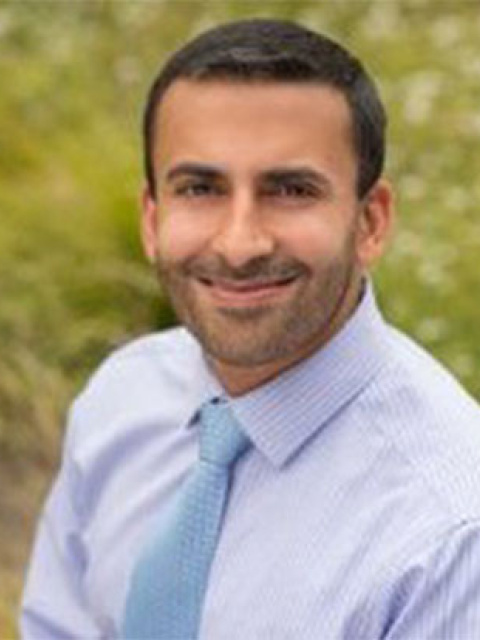
Dr. Ramsingh received his M.D. from Medical College of Georgia and completed his Anaesthesiology residency at Loma Linda University Medical Centre where he served as chief resident. He completed a Cardiac Anaesthesiology fellowship at UCLA. Afterwards, Dr. Ramsingh joined the faculty at the University of California at Irvine (UCI), where he served as Director of Cardiac Anaesthesiology and Director of Perioperative Ultrasound.
While at UCI, he led an innovative teaching programme for anaesthesiologists to apply a whole-body point-of-care ultrasound examination. Dr. Ramsingh recently joined Loma Linda University as the Director of Clinical Research and Perioperative Ultrasound. His research interests include the use of ultrasound and technology to improve perioperative care. He has co-directed national sessions and has published multiple articles on these topics. Dr. Ramsingh has also designed two websites for medical education: www.pocuseducation.com and www.foresightultrasound.com.
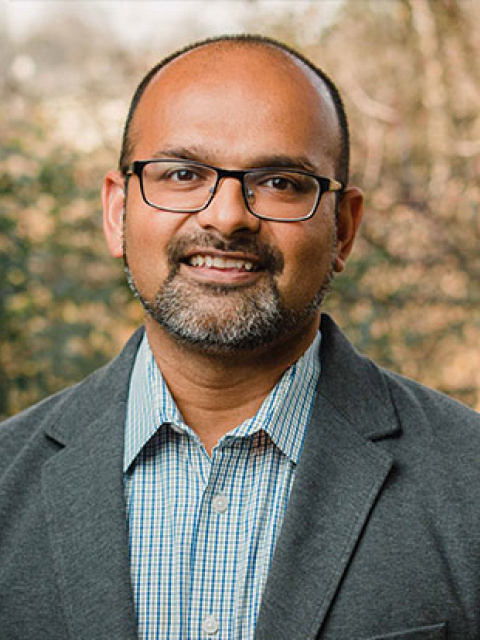
Dr. Rahul N. Desai, a fellowship-trained musculoskeletal interventional radiologist, founded Restore PDX Interventional Spine & Sports Medicine in 2013 with the mission to redefine musculoskeletal health care. This unique practise allows a group of clinicians with diverse medical specialties to focus on their patients’ health and well-being in a truly collabourative model.
In 2008, Dr. Desai began to expand his musculoskeletal ultrasound and interventional spine practise with the use of cutting edge orthobiologic therapies, such as Platelet-Rich-Plasma (PRP), Stem Cells, and Amniotic Membrane-Derived Growth Factors. He began treating tendon and ligament disorders, eventually expanding to joint and spine pathology. He tracked patient outcomes after regenerative biologic injection therapies with hundreds of before and after Tesla 3 MRI scans, which clearly documented tissue healing, directly correlating with clinical improvement. Dr. Desai gained both national and international acclaim in the fields of MSK radiology and orthobiologic treatments. Having performed thousands of regenerative injection therapies, he is a recognised international expert in the field of Platelet-Rich-Plasma (PRP), cellular therapies, and regenerative medicine. His endeavours include numerous lectures, presentations, publications, and clinical research.
This educational webinar is intended for healthcare professionals and not for patients or consumers. The material is provided for general educational purposes, as a reference and a supplement to professional experience, education and training, and should not be considered the exclusive source for this type of information. The presenter in this webinar is a paid consultant of FUJIFILM SonoSite, Inc., and is sharing the presenter's own views and opinions that do not necessarily represent the views and opinions of FUJIFILM SonoSite, Inc. This educational webinar is not intended to recommend any device for a particular indication or to provide indications for use for any device. At all times, it is the professional responsibility of the practitioner to exercise independent clinical judgment in each particular situation. Fujifilm assumes no responsibility or liability for any misuse of the information imparted in this webinar. This educational webinar does not supplement, replace, or supersede device labeling, including instructions for use, which accompanies any FUJIFILM Sonosite product.