


Image
Objective
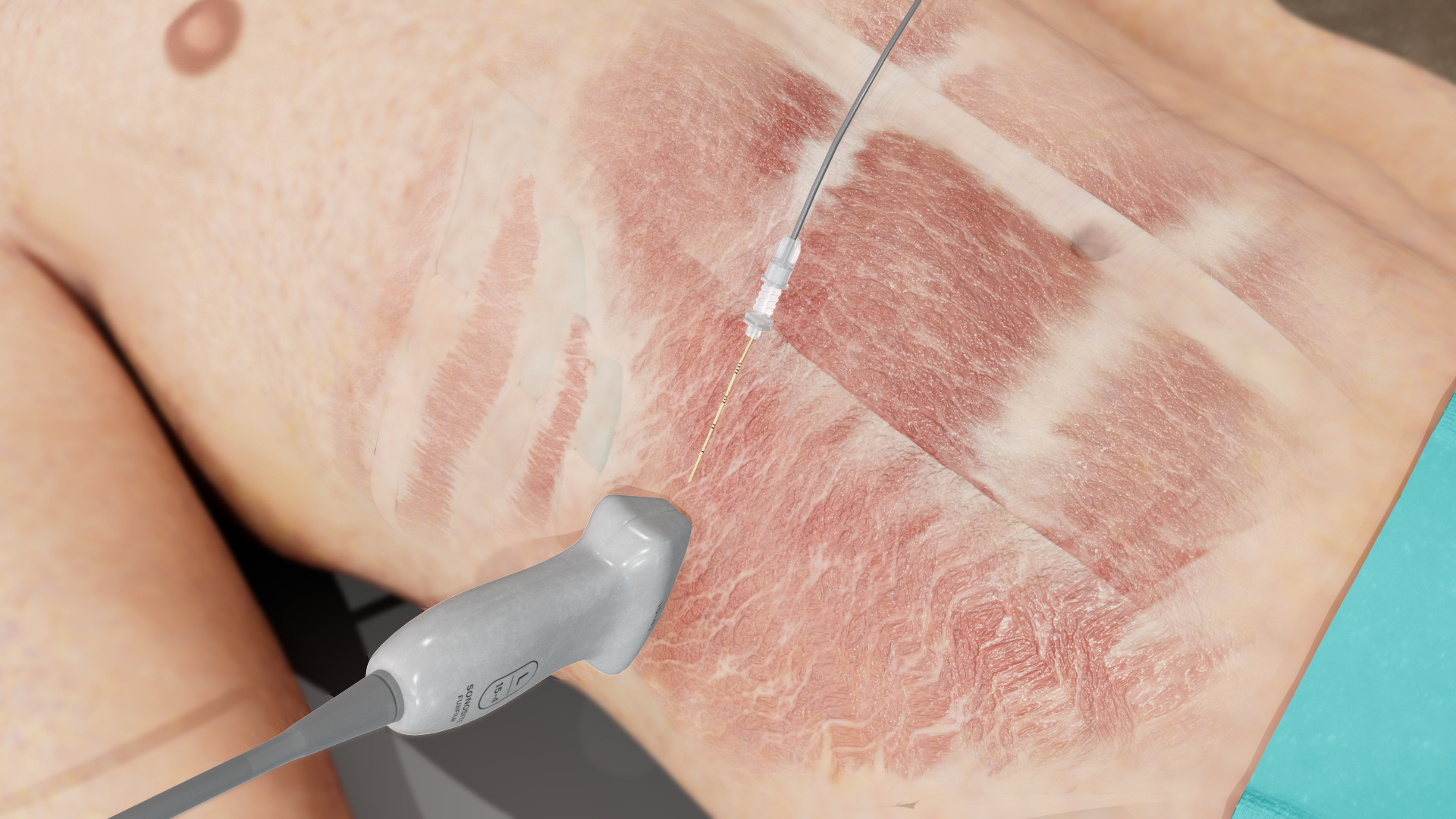
Learn how to perform a Tap block to provide post operative analgesia for patients undergoing abdominal surgery. Tap blocks can be easily performed with any Sonosite ultrasound system.
Procedure Description:
- Begin by placing the ultrasound transducer subcostal at the anterior axillary line.
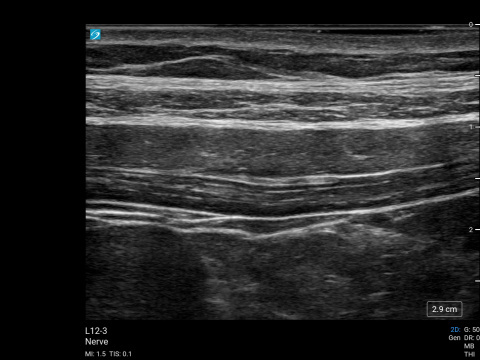
- The external oblique, internal oblique and transversus abdominis muscles should be identified.
- Use the in-plane needle technique with a medial to lateral approach. Local anaesthetic is deposited superficial to the transversus abdominis muscle and deep to the fascia located superficial to the muscle.
Image
Patient Positioning:
Supine
Transducer:
Technique:
- The TAP block is a fascial plane block. Like most fascial plane blocks the success of the block is volume dependent.
- The TAP block provides only somatic analgesia to the anterior abdominal wall. It does not provide visceral analgesia.
- A more lateral/posterior injection of local anaesthetic will allow for coverage of the lower abdomen for example the pfannenstiel incision for C-sections. A medial/anterior injection will provide better coverage of the mid/upper abdomen.
Teaching Points:
- The Tap Block performed at the costal border of the abdomen will ensure optimal coverage of the abdominal wall.
- T7 coverage is not reliable from a TAP block. TAP blocks may be combined with rectus sheath blocks for optimal coverage of the abdominal wall.
- See How To Video: Ultrasound Guided TAP Block
Click to download the guide today.