


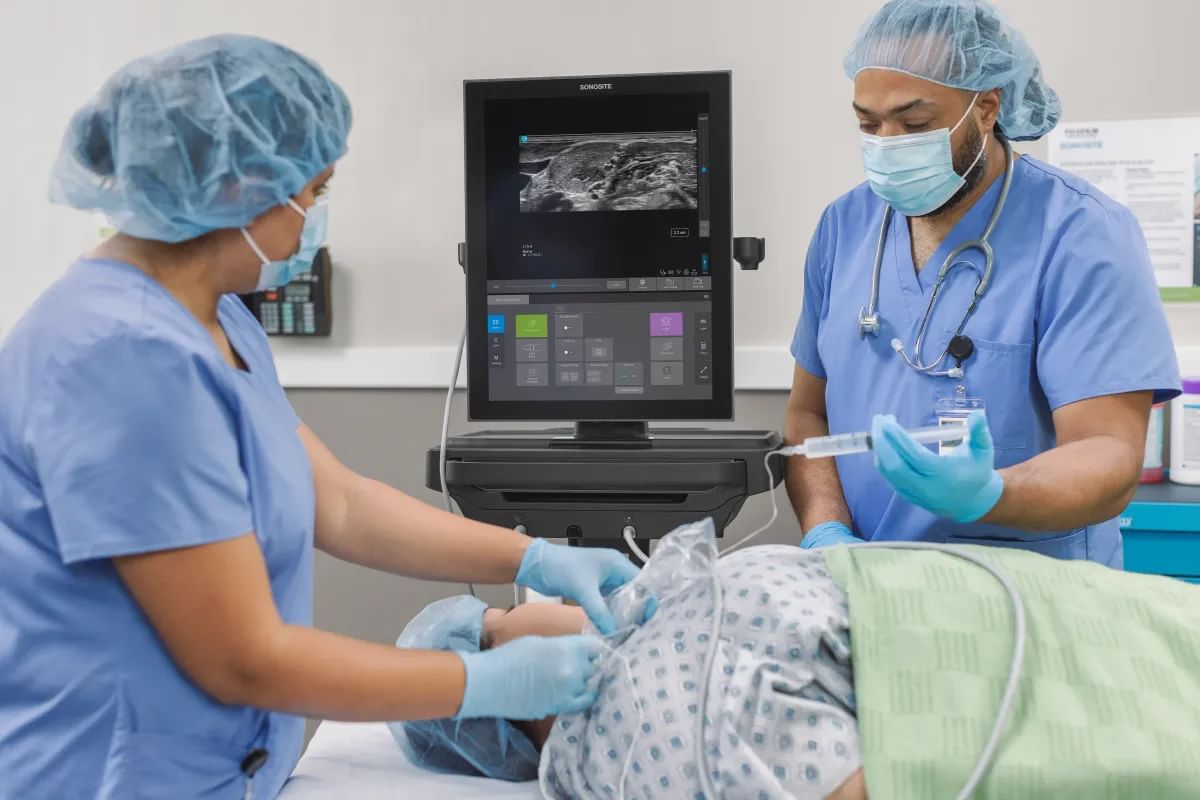
Portable ultrasound machines have revolutionised diagnostic imaging, offering mobility without sacrificing quality. The demand for these versatile imaging tools in modern healthcare has surged, allowing clinicians to provide timely and accurate diagnoses in various settings. Selecting the appropriate ultrasound machine tailored to your practise’s needs can significantly enhance efficiency, accuracy, and cost-effectiveness.
Whether you are part of a large healthcare institution or running a small private clinic, making an informed choice is crucial. This article aims to provide a framework to help navigate the complexities of choosing the best portable ultrasound machine for your practise. By understanding your practise’s needs and evaluating key features, practitioners can make well-informed decisions.
I. Understanding Your Practise's Needs
Identify Your Specialty: Different medical specialties require specific ultrasound capabilities. For instance, a busy anaesthesia department might need highly efficient equipment with needle visualisation tools, while a cardiac intensive care unit requires robust Doppler capabilities and measurements. Understanding your specialty helps narrow down machines designed for those specific use cases.
Assessing Your Workflow: Consider what your workflow looks like from the moment you grab the machine to the moment you complete the ultrasound examination. A department that bills for ultrasound studies and uses multiple transducers requires a robust machine that seamlessly connects to an imaging archival system. Conversely, a high-volume department that occasionally saves images and only needs needle visualisation requires a streamlined system with optimised presets for minimal adjustments on the machine.
Consider Your Environment: The setting in which the ultrasound machine will be used also influences your choice. For clinics and hospitals, compactness and ease of movement within the facility are crucial. For fieldwork or remote locations, a truly portable, durable system that can withstand various conditions is essential.
II. Key Features to Evaluate
Imaging Quality: High-quality imaging is vital for accurate diagnostics. Look for machines that offer high resolution and appropriate imaging modes for your application such as 2D, Colour Doppler, Power Doppler, Pulsed Wave Doppler, and M-mode. This ensures clear visualisation and quantitative information, vital for making precise diagnoses.
Portability: Portability in point-of-care ultrasound can range from handheld devices to small cart-based systems. Handheld devices are lightweight and can be carried in a pocket, making them ideal for fieldwork and high volume/low complexity exams, whereas cart-based portable machines offer more advanced features but have a larger footprint.
Battery Life and Power Options: A reliable battery life is critical, especially for field use where power sources may be limited. Dual power options, including battery and plug-in capabilities, provide flexibility and help ensure the machine can be used in various settings without minimal interruption.
Connectivity: Modern ultrasound machines should feature seamless data transfer options like Wi-Fi or USB. Compatibility with EMR (Electronic Medical Records) and PACS (Picture Archiving and Communication Systems) is essential for integrating patient images and reports smoothly into your practise’s workflow.
User Interface and Ease of Use: An intuitive user interface with simple-to-use controls is critical for efficient operation. Look for systems with a wide range of preset exam options and customisable settings to meet the specific needs of your practise. Ease of use may reduce the learning curve and time to diagnosis, leading to a better patient care environment.
Durability and Build Quality: Durability is crucial, especially for field or mobile use where the equipment might face rough conditions. Depending on your environment, it may be necessary to opt for machines that are drop-tested and water-resistant, featuring strong build quality and resilience against wear and tear.
Cost and Budget: Evaluate both the initial purchase cost and the long-term value of the ultrasound machine. Investing in a reliable ultrasound machine with features that are crucial for your practise can save costs in the long run. Balance your budget with the machine’s capabilities and ensure it meets your essential requirements.
III. Additional Considerations
Warranty and Support: A strong warranty and reliable customer service are essential for long-term satisfaction with your ultrasound machine. Check for warranties that cover system and transducer repairs, accidental damage, and loaner units to ensure continuous operation.
Maintenance and Upgrades: Consider service contracts and the availability of regular software upgrades. Some ultrasound manufacturers require maintenance check-ups to keep their products running smoothly, some do not. Software upgrades ensure that you have access to the latest features and improvements, without having to purchase a new machine.
Try Before You Buy: If possible, evaluate the ultrasound machine via a demonstration or trial period. Hands-on experience allows you to test the machine’s performance, ease of use, and suitability for your practise before making a purchase.
Conclusion
Choosing the right portable ultrasound machine involves understanding the specific needs of your practise and evaluating features such as imaging quality, portability, battery life, connectivity, user interface, durability, and cost.
Related Resources
Continue your research with these resources to help you evaluate portable ultrasound systems, select the right transducers, and better understand point-of-care ultrasound (POCUS) technology.
- Portable Ultrasound Machines & Accessories
Explore the complete FUJIFILM Sonosite portfolio of portable ultrasound systems, accessories, and point-of-care imaging solutions to compare features, form factors, and clinical applications.
https://www.sonosite.com/products/ultrasound-machines-and-accessories
- Ultrasound Transducers
Learn about Sonosite's portfolio of ultrasound transducers, including linear, curvilinear, phased array, and specialty probes designed for a wide range of clinical applications.
https://www.sonosite.com/products/ultrasound-transducers
- How to Choose the Right POCUS Transducer for Your Practise
Selecting the appropriate transducer is just as important as selecting the ultrasound system itself. This guide explains how probe frequency, footprint, and imaging depth affect clinical performance across different specialties and procedures.
https://www.sonosite.com/education/learn/how-choose-right-pocus-transducer-your-practise
- Understanding the Basics of POCUS Probe Types
New to point-of-care ultrasound? This introductory guide explains the differences between common probe types—including linear, curvilinear, phased array, and endocavitary transducers—and their most common clinical applications.
https://www.sonosite.com/education/learn/understanding-basics-pocus-probe-typ
Portable Ultrasound Machine Selection FAQ
What should I look for when choosing a portable ultrasound machine?
Start by evaluating your clinical specialty, imaging requirements, workflow, and practise environment. Important considerations include image quality, available imaging modes, transducer selection, portability, battery life, DICOM/PACS integration, EMR connectivity, durability, ease of use, and long-term service support. Consider whether the system you are looking at is designed specifically for point-of-care environments and can support your clinical needs today while scaling as your practise grows.
Which image modes are most important in a portable ultrasound system?
Most point-of-care applications benefit from B-mode (2D) imaging, and colour doppler while cardiac and vascular assessments often require Power Doppler, Pulsed Wave (PW) Doppler, and M-mode. The appropriate imaging modes depend on your clinical specialty and the procedures you perform. Clinicians should evaluate not only which imaging modes are available, but also how efficiently those modes can be accessed during real-world patient care.
What factors contribute to the total cost of ownership?
Beyond the purchase price, consider software licencing, maintenance agreements, warranty coverage, training, probe durability, service availability, and future software upgrades. Evaluating total cost of ownership helps healthcare organisations compare systems over their full operational lifespan rather than focusing only on initial acquisition cost. Equipment, reliability, clinical uptime, ease of service, and product longevity can have an impact on long-term value and operational costs.
How important is DICOM and PACS integration?
For hospitals and healthcare systems, DICOM compliance and PACS/EMR integration are essential for securely storing, reviewing, and sharing ultrasound studies. Practises that routinely archive images or bill for ultrasound examinations typically benefit from seamless workflow integration.
What makes a portable ultrasound machine durable?
Portable ultrasound systems used in emergency medicine, critical care, anaesthesia, and field environments should be designed to withstand frequent transport and demanding clinical conditions. Features such as rugged construction, sealed and fluid-resistant controls, validated drop-testing, and proven performance in demanding clinical environments can support long-term reliability.
Should I choose a handheld or portable ultrasound system?
The right choice depends on your clinical applications, workflow requirements, and imaging needs. Handheld ultrasound devices offer portability and may be appropriate for focused assessments or environments where size is the primary consideration. However, clinicians should also evaluate factors such as image quality, display size, transducer versatility, advanced imaging capabilities, workflow integration, and long-term durability.
Portable ultrasound systems are available in a range of form factors and can provide greater flexibility across multiple clinical applications. These systems often support a broader selection of transducers, advanced imaging modes, comprehensive documentation workflows, and higher-performance imaging for demanding point-of-care environments. When evaluating ultrasound technology, it is important to balance portability with the clinical capabilities required for your practise.
How does my medical specialty affect which ultrasound machine I should choose?
Different specialties prioritise different capabilities. For example, anaesthesiology often requires high-frequency linear transducers and needle visualisation technology for regional anaesthesia, while cardiology and critical care frequently depend on comprehensive Doppler capabilities and cardiac measurements. Some healthcare organisations prefer ultrasound platforms that can support multiple departments and multiple clinical specialties, reducing the need for separate systems and imaging priorities.
*Please refer to product indications for use located in FUJIFILM Sonosite ultrasound system user guides.*