


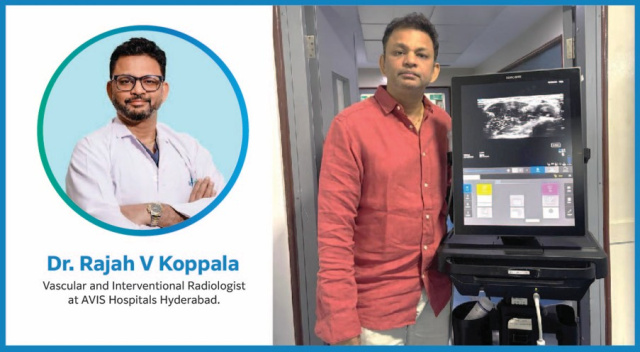
Insights from Dr. Rajah V. Koppala, Vascular & Interventional Radiologist
About the Expert
Dr. Rajah V. Koppala is a Vascular and Interventional Radiologist with over 30 years of clinical experience in advanced vascular and venous care. He completed his MBBS and MD in Diagnostic Radiology from Osmania University, Hyderabad, and has received additional training in Vascular and Interventional Radiology in the UK and USA.
A Decade with Ultrasound in Clinical Practice
Dr. Koppala has incorporated ultrasound into his clinical practice for approximately 10 years. He currently utilizes the Sonosite ST point-of-care ultrasound (POCUS) system for vascular access assessments and focused assessment with sonography for trauma (FAST) exams.
Why Point-Of-Care Ultrasound (POCUS) Stands Apart in a Busy Clinical Setting
Compared to other imaging modalities, point-of care ultrasonography offers one key benefit: immediacy. "Real-time, radiation-free, bedside imaging allows for fast assessment, often without having to move a patient who may be critically ill. In today’s challenging clinical environments, point-of-care ultrasound systems like Sonosite ST directly support fast decision-making and promote better patient outcomes," Dr. Koppala explains.
POCUS in Day-to-Day Care: A Case in Point
POCUS has become integral to Dr. Koppala’s workflow. One recent case highlights its impact: "In an emergency, we had an unstable patient. Within a fraction of a minute, bedside ultrasound helped me to identify a large pericardial effusion. That immediate finding directly guided our next steps and management."
3 Ways POCUS Improves Practice and Patient Outcomes
Dr. Koppala describes several areas where POCUS is commonly applied in his practice, including:
- Vascular Access: Ultrasound guidance may assist in central line placement, potentially helping to reduce certain procedural risks.
- Deep Vein Thrombosis (DVT) Assessment: Bedside ultrasound can be used to evaluate for a possible DVT, especially in post-operative patients.
- Chest Assessment: Lung ultrasound may aid in assessing conditions such as pneumonia and heart failure, which can inform further diagnostic or treatment decisions. It can also potentially reduce the need for patient transfers or additional imaging such as CT scans.
Building the Next Generation of Ultrasound Users
In addition to clinical work, Dr. Koppala is involved in educational activities, including conducting POCUS workshops for medical residents and contributing to the development of standardized vascular ultrasound protocols. These efforts aim to support broader clinical adoption and consistent use of ultrasound techniques. "Training more clinicians to use ultrasound confidently at the bedside is key to expanding its benefits across specialties," he notes.
Dr. Rajah V. Koppala practices Vascular & Interventional Radiology with a focus on advanced, minimally invasive, image-guided care.